











You’re crushing it at the gym, dialing in your protein intake, and optimizing your pre-workout nutrition. But here’s the million-dollar question: can you skip the produce aisle and just throw back a daily greens powder, or are you shortchanging your gains? With the superfood powder market exploding in 2026, fitness enthusiasts are wondering whether these convenient supplements can truly replace the nutritional powerhouse of whole vegetables, or if the answer is more nuanced than a simple yes or no.
Let’s cut through the marketing hype and dive into the science-backed truth about greens powders, whole vegetables, and how to strategically use both to maximize your performance and recovery.
Understanding What Greens Powders Actually Deliver
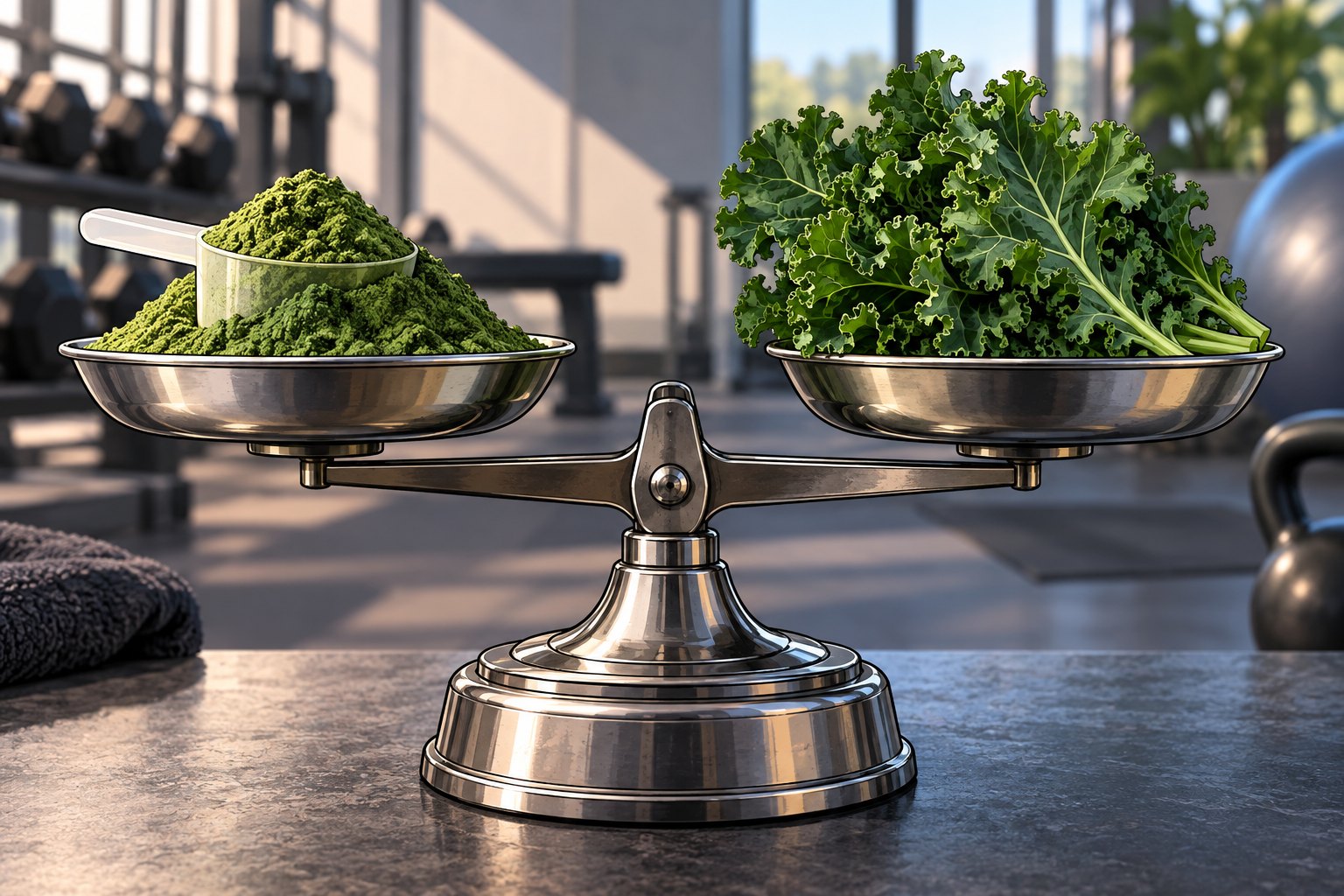
A quality daily greens powder typically contains concentrated forms of vegetables, fruits, algae, grasses, and other plant-based ingredients. These vegetable powder supplements compress the nutritional content of multiple servings of produce into a single scoop, offering a concentrated dose of vitamins, minerals, antioxidants, and phytonutrients.
The greens powder ingredients you’ll commonly find include:
- Leafy greens like spirulina, chlorella, and wheatgrass
- Cruciferous vegetables such as broccoli and kale extracts
- Antioxidant-rich fruits like acai and goji berries
- Digestive enzymes and probiotics for gut health
- Adaptogenic herbs for stress management and recovery
- Alkalizing compounds to support pH balance
The key advantage here is concentration and convenience. You’re getting a diverse spectrum of nutrients from dozens of sources in one serving, something that would require significant meal planning and prep to achieve through whole foods alone.
The Irreplaceable Benefits of Whole Vegetables
Despite the impressive nutritional profile of superfood powders, whole vegetables bring unique benefits to the table that processing can’t fully replicate. Understanding these differences helps you make informed decisions about your nutrition strategy.
Fiber: The Unsung Hero of Performance
Whole vegetables provide dietary fiber in its complete, intact form. This fiber supports digestive health, regulates blood sugar levels, promotes satiety, and feeds beneficial gut bacteria. While some greens powders contain fiber, the processing required to create a mixable powder often reduces the total fiber content compared to eating the whole vegetable.
For athletes and gym-goers, optimal gut health directly impacts nutrient absorption, immune function, and even recovery. Your gut microbiome influences inflammation levels, which affects how quickly you bounce back from intense training sessions.
Bioavailability and Nutrient Synergy
Whole vegetables contain nutrients in their natural matrix, surrounded by cofactors, enzymes, and complementary compounds that enhance absorption. When you crunch into a fresh bell pepper, you’re getting vitamin C alongside bioflavonoids that improve its utilization. That broccoli floret delivers sulforaphane in a form that your body recognizes and processes efficiently.
The processing required to create greens powders, even gentle freeze-drying, can affect the structure and bioavailability of certain compounds. Heat-sensitive vitamins, delicate enzymes, and volatile phytonutrients may be partially degraded during manufacturing.
Satiety and Calorie Management
If you’re working toward body composition goals, whole vegetables are your secret weapon. They provide volume, require chewing (which signals satiety), and take time to digest. A massive salad might contain only 100 calories but keeps you full for hours. This mechanical and psychological satisfaction is impossible to replicate with a powder you drink in 30 seconds.
The Strategic Case for Using Both
Here’s where we level up your nutrition game: the most effective approach isn’t choosing between greens powders and whole vegetables. It’s strategically using both to cover all your bases and maximize performance.
When Greens Powder Benefits Shine
A daily greens powder fills critical gaps and provides insurance against nutritional deficiencies. Consider these scenarios where superfood powders offer distinct advantages:
High Training Volume: When you’re training intensely, your micronutrient needs skyrocket. The oxidative stress from heavy lifting and conditioning increases your requirement for antioxidants and anti-inflammatory compounds. Greens powders provide concentrated doses of these protective nutrients without adding significant calories or requiring extensive meal prep.
Travel and Inconsistent Schedules: Life happens. Business trips, early morning training sessions, late nights: these realities make consistent whole food consumption challenging. Throwing a greens powder in your shaker bottle takes 15 seconds and ensures you’re not completely missing out on vegetable nutrition during hectic periods.
Variety and Diversity: Most people eat the same 5-10 vegetables repeatedly. A quality greens powder exposes your body to 30-50 different plant sources, including exotic ingredients like moringa, ashwagandha, and various algae you’d never regularly consume. This diversity supports a more robust gut microbiome and broader nutrient coverage.
Post-Workout Convenience: After crushing a brutal leg session, you need fast nutrition. Mixing greens powder into your post-workout shake delivers alkalizing compounds that may help buffer exercise-induced acidity while providing antioxidants to combat inflammation, all in a quickly absorbed form.
Why Whole Vegetables Remain Non-Negotiable
Despite greens powder benefits, whole vegetables should form the foundation of your nutrition plan:
Complete Fiber Intake: Aim for 25-35 grams of fiber daily from whole food sources. This supports optimal digestion, maintains stable energy levels, and promotes the healthy gut environment necessary for maximum nutrient absorption from all your supplements.
Meal Volume and Satisfaction: Building meals around vegetables creates satisfying portions that prevent overeating. That chicken breast and rice becomes a complete, filling meal when paired with roasted Brussels sprouts and a side salad.
Culinary Enjoyment: Food isn’t just fuel. It’s pleasure, culture, and experience. The crunch of fresh vegetables, the flavors of roasted cauliflower, the satisfaction of a well-composed meal contributes to dietary adherence and psychological wellbeing.
Practical Implementation: Your Action Plan
Ready to optimize your vegetable and greens powder strategy? Here’s how to implement both for maximum results:
The Daily Baseline
Start every day with whole vegetables as your foundation. Target 4-6 servings minimum from varied sources, since different colors indicate different phytonutrient profiles. Include cruciferous vegetables (broccoli, cauliflower, Brussels sprouts), leafy greens (spinach, kale, arugula), colorful options (bell peppers, tomatoes, carrots), and alliums (onions, garlic).
Add your daily greens powder as nutritional insurance. Take it at a consistent time; many people prefer morning or post-workout. Mix it with water, blend it into smoothies, or add it to your protein shake. Consistency matters more than timing.
Pre-Workout Considerations
Skip the massive salad before training. You don’t want bulk and fiber competing with blood flow to working muscles. Instead, use your greens powder 30-60 minutes pre-workout for easily digestible nutrients without the volume. Save whole vegetables for meals 2-3 hours before training or in your post-workout meals.
Quality Markers to Look For
Not all greens powders deliver equal results. Look for products with:
- Transparent ingredient labels showing actual amounts (no proprietary blends)
- Organic certification to minimize pesticide exposure
- Third-party testing for purity and potency
- Minimal fillers, sweeteners, or artificial ingredients
- Freeze-dried or low-temperature processing to preserve nutrients
- Inclusion of digestive enzymes and probiotics
Addressing Common Concerns and Misconceptions
Can Greens Powder Replace Vegetables Entirely?
The short answer: no. While vegetable powder supplements provide concentrated nutrients, they can’t fully replicate the fiber content, mechanical satiety, and complete nutritional matrix of whole foods. Think of greens powders as supplementation: they enhance an already solid nutrition foundation rather than replacing it.
Are Greens Powders Just Expensive Placebos?
Quality greens powders containing clinically relevant amounts of active ingredients provide measurable benefits. Research shows that concentrated vegetable and fruit powders can increase antioxidant status, support immune function, and improve markers of overall health. However, these benefits complement (not replace) whole food nutrition.
Will I Notice Performance Improvements?
Direct performance benefits from greens powders are typically subtle and cumulative. You probably won’t set a PR the day you start taking one. However, the long-term benefits (reduced inflammation, better recovery, enhanced immune function, improved gut health) create the foundation for consistent training and progressive overload, which ultimately drives performance improvements.
The Bottom Line: Synergy Over Substitution
The greens powder versus whole vegetables debate creates a false dichotomy. The real question isn’t which one to choose. It’s how to leverage both strategically for optimal health and performance.
Whole vegetables provide the foundation: complete fiber, satiety, natural nutrient matrices, and the satisfaction of real food. Your daily greens powder serves as nutritional insurance, filling gaps during hectic schedules, providing concentrated antioxidants during high training volumes, and exposing you to a broader spectrum of beneficial plant compounds than you’d typically consume.
Champions don’t look for shortcuts. They look for advantages. Using both whole vegetables and quality greens powders isn’t redundant; it’s strategic optimization. You’re stacking every possible advantage to support recovery, fuel performance, and build the resilient, high-performing body you’re working toward in the gym.
Stop overthinking this decision. Load your meals with colorful, varied whole vegetables. Mix your greens powder into your daily routine for added insurance and convenience. Focus your mental energy on what actually moves the needle: progressive overload in your training, consistent effort, and the compound effect of daily nutrition choices.
Your body deserves both the comprehensive nutrition of whole foods and the concentrated benefits of quality supplementation. Give it both, train hard, recover smart, and crush your goals. That’s how you level up in 2026 and beyond.