



Your muscles don’t grow in the gym. They grow while you sleep. That brutal leg session or intense upper body workout creates microscopic tears in muscle fibers, but the actual repair and growth happens during deep sleep when your body releases crucial hormones like growth hormone and testosterone. If you’re crushing your workouts but skimping on quality sleep, you’re leaving serious gains on the table.
The reality is stark: studies show that even one night of poor sleep can decrease muscle protein synthesis by up to 18% and increase cortisol levels that actively break down muscle tissue. For athletes and serious lifters, sleep isn’t just about feeling rested. It’s a performance-enhancing tool as powerful as any supplement in your stack.
Let’s break down the science-backed sleep supplements that can optimize your recovery, maximize muscle growth, and help you wake up ready to dominate your next training session.
Why Sleep Quality Matters More Than Sleep Quantity
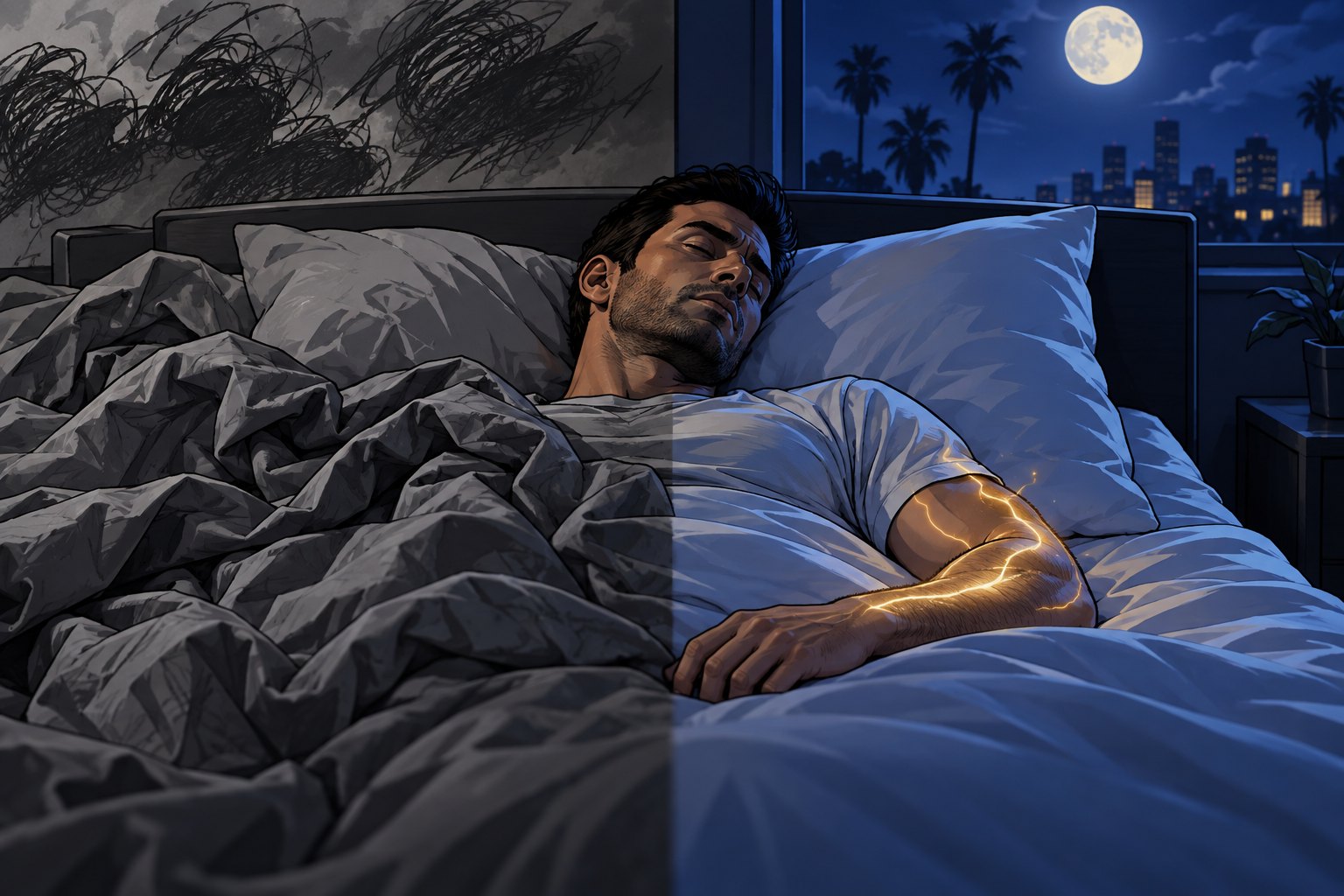
You’ve probably heard the standard advice: get 7-9 hours of sleep per night. But here’s what most people miss: sleep quality trumps quantity every time. You could spend nine hours in bed tossing and turning, never reaching deep sleep stages, and wake up feeling wrecked with minimal recovery benefits.
Deep sleep, specifically stages 3 and 4 of non-REM sleep, is where the magic happens for muscle recovery. During these stages, your body experiences:
- Peak growth hormone secretion (up to 75% of daily GH release occurs during deep sleep)
- Enhanced protein synthesis and muscle repair
- Decreased cortisol levels that would otherwise catabolize muscle tissue
- Restoration of glycogen stores depleted during training
- Neural recovery and nervous system regeneration
Sleep aids for athletes need to do more than just knock you out. They should promote quality sleep architecture, helping you cycle through all sleep stages properly and maximize time spent in those crucial deep sleep phases.
The Science of Sleep and Muscle Building
Understanding the relationship between sleep and muscle building helps clarify why sleep supplements for recovery deserve a spot in your supplement arsenal. When you train hard, you create an anabolic window that extends far beyond your post-workout shake.
Research published in the Journal of Applied Physiology demonstrates that muscle protein synthesis remains elevated for up to 48 hours after resistance training in trained individuals. However, this process requires adequate sleep to function optimally. Sleep deprivation impairs mTOR signaling pathways, the primary mechanism your body uses to trigger muscle growth.
Additionally, sleep restriction significantly impacts testosterone and growth hormone levels. One study found that men who slept only 5 hours per night for one week experienced a 10-15% decrease in testosterone levels compared to their well-rested baseline. For natural lifters, maintaining optimal hormone levels is crucial for making consistent progress.
Top Natural Sleep Supplements for Recovery
Magnesium: The Foundational Sleep Mineral
Magnesium for sleep isn’t just trendy supplement advice. It’s backed by solid science. This essential mineral regulates neurotransmitters that promote relaxation and controls your circadian rhythm. Over 60% of adults don’t get adequate magnesium from their diet, and deficiency directly impacts sleep quality and recovery.
Magnesium activates your parasympathetic nervous system, responsible for helping you calm down and relax. It also regulates melatonin production and binds to GABA receptors in the brain, producing a calming effect that makes falling asleep easier.
For sleep optimization supplements, look for highly bioavailable forms like magnesium glycinate or magnesium threonate. Avoid magnesium oxide, which has poor absorption and can cause digestive issues. An effective dose ranges from 200-400mg taken 30-60 minutes before bed.
Melatonin for Muscle Growth and Sleep Regulation
Melatonin for muscle growth works on multiple levels. While primarily known as your body’s natural sleep hormone, melatonin also functions as a powerful antioxidant that reduces exercise-induced oxidative stress and inflammation, both factors that impair recovery.
Research indicates that melatonin supplementation can improve sleep onset latency (how quickly you fall asleep) by an average of 7 minutes and increase total sleep time by about 8 minutes. While these numbers might seem modest, the consistency of sleep quality improvements matters more for long-term recovery benefits.
The key with melatonin is dosing conservatively. Many supplements contain 5-10mg, but research shows that 0.5-3mg is often more effective with fewer next-day grogginess issues. Start low and assess your individual response. Take it 30-90 minutes before your target bedtime to align with your natural circadian rhythm.
ZMA Supplements: The Classic Recovery Stack
ZMA supplements combine zinc, magnesium, and vitamin B6, a trio specifically formulated to support recovery sleep supplements goals. Originally developed for athletes, ZMA addresses common mineral deficiencies that intense training can exacerbate through sweat loss and increased metabolic demands.
Zinc plays a crucial role in testosterone production and immune function, both critical for recovery. Studies show that zinc supplementation in deficient athletes can restore testosterone levels and improve training adaptations. Magnesium aspartate in ZMA formulations provides the sleep and relaxation benefits discussed earlier, while vitamin B6 enhances absorption and supports neurotransmitter synthesis.
A clinically effective ZMA dose contains approximately 30mg zinc, 450mg magnesium, and 10-11mg vitamin B6. Take it on an empty stomach before bed, away from calcium-containing foods or supplements, as calcium can interfere with zinc and magnesium absorption.
L-Theanine: Stress Reduction Without Sedation
L-theanine is an amino acid found in green tea that promotes relaxation without causing drowsiness. It’s particularly valuable for athletes whose minds race at night thinking about training, nutrition, or life stress that impacts recovery.
This compound increases alpha brain wave activity, creating a state of calm alertness that transitions smoothly into sleep. L-theanine also boosts GABA, serotonin, and dopamine levels, neurotransmitters that regulate mood, sleep, and stress response.
Research shows that 200-400mg of L-theanine can improve sleep quality, reduce sleep latency, and decrease nighttime awakenings. It pairs exceptionally well with magnesium in recovery sleep supplements formulations, creating a synergistic calming effect.
Glycine: The Underrated Sleep Amino Acid
Glycine deserves more attention in discussions about muscle recovery sleep. This simple amino acid acts as an inhibitory neurotransmitter in the brain, promoting relaxation and lowering core body temperature, a necessary physiological shift for initiating sleep.
Clinical studies demonstrate that 3 grams of glycine taken before bed improves subjective sleep quality, reduces time to fall asleep, and enhances next-day cognitive performance. For athletes, glycine also supports collagen synthesis, benefiting joint and connective tissue recovery alongside muscle repair.
Glycine’s mild, slightly sweet taste makes it easy to mix into water or a small bedtime snack. It won’t interfere with other recovery sleep supplements and can be taken alongside magnesium, melatonin, or ZMA without issues.
Creating Your Optimal Sleep Supplement Stack
The most effective sleep optimization supplements approach combines multiple ingredients that work synergistically. Here’s a practical framework for building your stack based on your specific needs:
Baseline Stack (Start Here):
- 200-400mg magnesium glycinate
- 200mg L-theanine
- 3g glycine
Enhanced Recovery Stack (Add If Needed):
- Baseline stack ingredients
- 0.5-3mg melatonin (start low)
- Full-spectrum ZMA supplement
Take your sleep supplements 30-60 minutes before your target bedtime. Consistency matters: your circadian rhythm responds to regular patterns, so maintaining a consistent sleep schedule amplifies supplement effectiveness.
Beyond Supplements: Sleep Hygiene for Maximum Recovery
Even the best natural sleep supplements can’t overcome terrible sleep habits. Level up your sleep game with these evidence-based strategies:
Temperature Control: Keep your bedroom between 65-68°F. Your core body temperature needs to drop for quality sleep, and a cool environment facilitates this process.
Light Management: Block blue light from screens 1-2 hours before bed, or use blue light blocking glasses. Install blackout curtains to eliminate ambient light pollution that disrupts melatonin production.
Strategic Carb Timing: Consuming moderate carbohydrates in your evening meal can increase tryptophan availability, supporting serotonin and melatonin synthesis. This is especially valuable for athletes following lower-carb approaches who can strategically place carbs at dinner.
Stress Management: Practice 10 minutes of deep breathing, meditation, or gentle stretching before bed. Chronic stress elevates cortisol, which directly antagonizes quality sleep and recovery.
Frequently Asked Questions
Can I take sleep supplements every night?
Most natural sleep supplements like magnesium, glycine, and L-theanine are safe for daily use and address underlying deficiencies. Melatonin is best used strategically rather than every night to avoid potential disruption of natural production. Cycle on and off every few months or use it only during high-stress training phases.
Will sleep supplements make me groggy in the morning?
Properly dosed natural sleep supplements shouldn’t cause morning grogginess. If you experience this, you’re likely taking too much melatonin or taking supplements too close to your wake time. Ensure you’re allowing 7-9 hours of sleep opportunity after taking your stack.
Do sleep supplements actually build muscle or just help me feel rested?
Quality sleep directly impacts muscle protein synthesis, hormone production, and recovery capacity. Sleep supplements that improve sleep quality create the optimal physiological environment for muscle growth. They’re not anabolic themselves, but they maximize your body’s natural recovery and growth processes.
Maximize Your Recovery Starting Tonight
Sleep supplements for recovery aren’t a luxury. They’re a necessity for serious athletes who demand maximum results from their training. By optimizing your sleep quality with clinically-backed ingredients like magnesium, melatonin, ZMA, and amino acids, you create the foundation for consistent muscle growth, improved performance, and faster recovery between sessions.
Start with a basic magnesium and L-theanine stack, assess your response over 2-3 weeks, then add additional ingredients as needed. Combined with solid sleep hygiene practices, you’ll transform your recovery and wake up ready to crush your next workout.
Your gains are waiting for you, in your sleep. Level up your recovery game and stop leaving muscle growth on the table by prioritizing quality sleep supported by science-backed supplementation.