
CoQ10 helps your cells turn food into energy and works as an antioxidant; in healthy adults who train, supplements lower muscle damage markers more than they boost performance. A 2024 analysis of 28 trials and 830 adults found lower blood markers of muscle damage after hard exercise, while a 2025 analysis of 24 studies in healthy adults found CoQ10 reliably raises blood levels but moves performance only a little, and not consistently. Think recovery support you take daily, not a pre-workout.
“CoQ10” is typed into Google about 246,000 times a month in the US, and multivitamin searches peak in January. Google’s first page is written for patients, doctors and shoppers. This is the lifter’s version: what the training trials found and did not find, the dose they used, and how much of it you could ever eat.
The Short Version
- Performance: across 24 studies in healthy adults, CoQ10 raised blood levels consistently but changed performance only slightly and inconsistently; strength barely moved (British Journal of Nutrition, 2025).
- Recovery: across 28 trials and 830 adults, it lowered creatine kinase, a blood marker of muscle damage, by about 51 units per litre on average (Clinical Nutrition ESPEN, 2024).
- Food: a normal diet supplies about 3 to 6 mg a day; a 3 oz serving of fried beef holds 2.6 mg (Linus Pauling Institute).
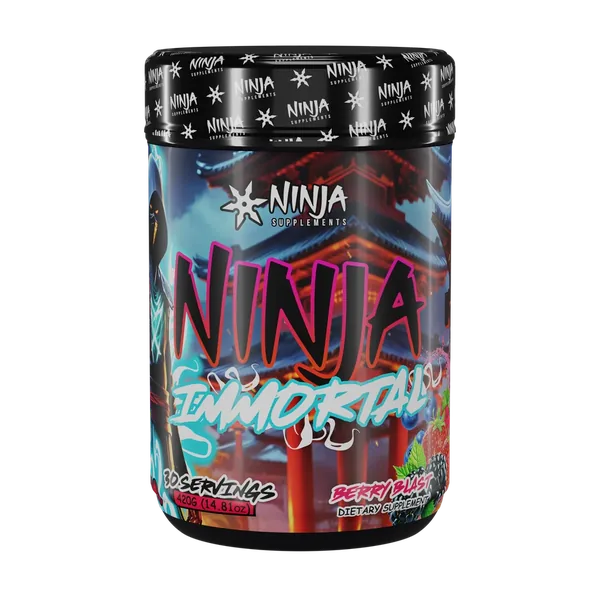
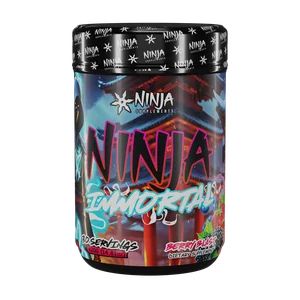
- Ninja Immortal holds 100 mg of CoQ10 a scoop, inside the 30 to 300 mg a day used in trials of athletes.
What Is CoQ10, and What Does It Do in Your Body?
CoQ10 (coenzyme Q10) is a fat-soluble compound your body makes itself, and it has two main jobs: it carries electrons along the chain your mitochondria use to make ATP, the fuel every muscle contraction burns, and it works as an antioxidant in cell membranes (Linus Pauling Institute; Food and Function, 2018).
Picture Miami’s grid on an August night with every air conditioner running. The mitochondria are the power plants; CoQ10 is the line crew passing the current from one station to the next. No crew, no power, however much fuel sits in the yard.
The catch: healthy people make and eat enough CoQ10 to avoid running short (Linus Pauling Institute). A supplement reliably raises the amount in your blood. Whether it raises the amount inside your muscles, in a healthy person, is not clear. That gap between blood and muscle may be one reason the training results below are modest.
Do You Have Less CoQ10 as You Age?
Your organs hold less of it: a Swedish study of human tissue from people aged one day to 81 years found CoQ10 levels in most organs peaked around age 20 and fell steadily after that (Lipids, 1989). It measured organs such as the heart, liver, kidneys and lungs, not the muscles you train, and it is one old study.
Does CoQ10 Improve Your Workouts?
A little, sometimes: the newest summary says CoQ10 raises your blood levels consistently but moves performance only slightly and not reliably. In the 2025 meta-analysis of 24 studies in healthy adults, taking it daily for days to weeks showed a small benefit that did not hold once outlier studies were removed. A single dose before exercise showed no benefit, strength and sprint measures barely changed, and endurance was borderline. The authors rated their certainty very low to low.
A Japanese trial put 17 healthy adults on 100 mg, 300 mg or a placebo for eight days, then had them ride a bike for two 2-hour sessions (Nutrition, 2008). On 300 mg they kept more of their sprint speed late in the session and felt less tired; the gains it reports came on 300 mg, not 100 mg. You will not feel it in your first set.
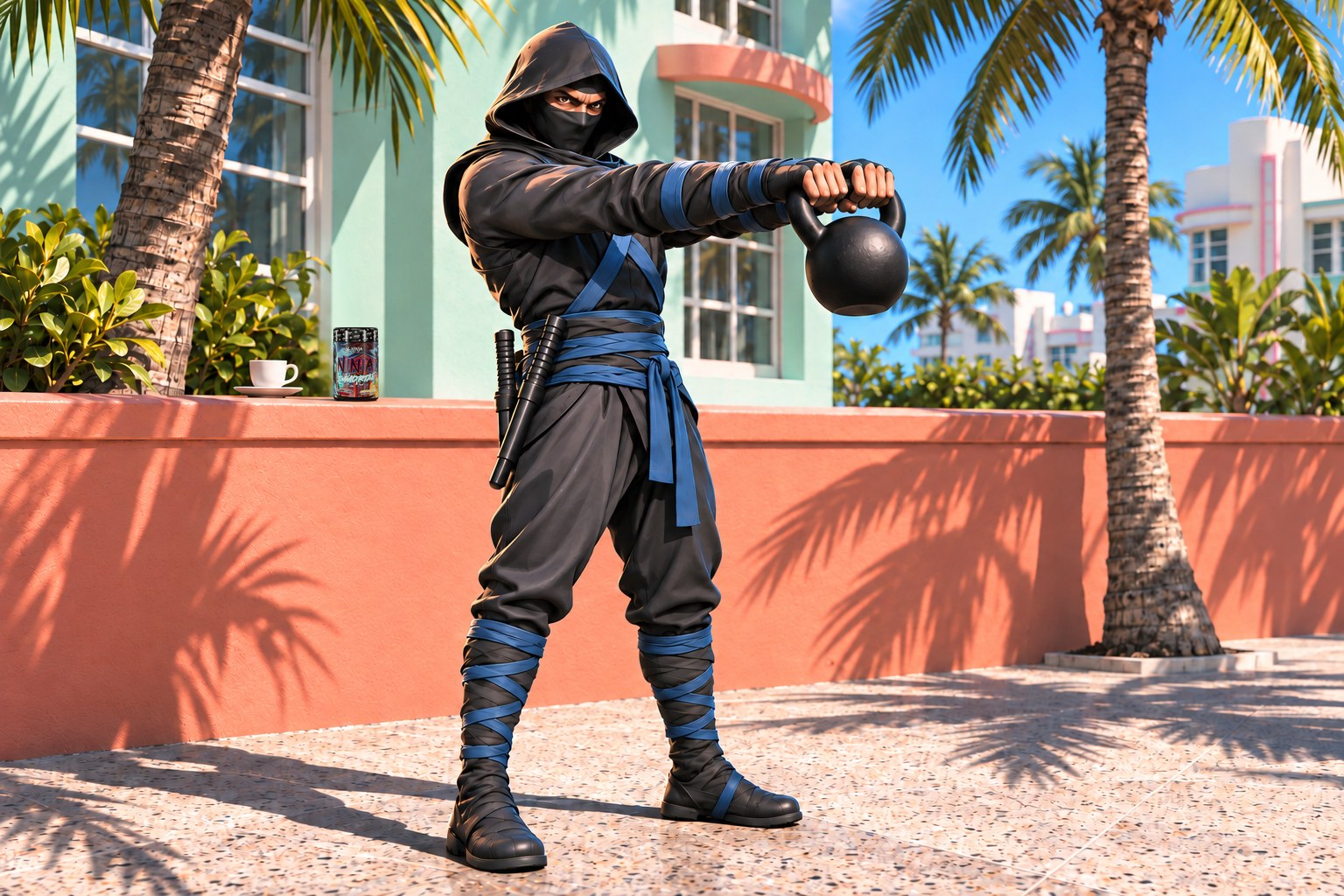
Coach’s Corner: The Engine Session
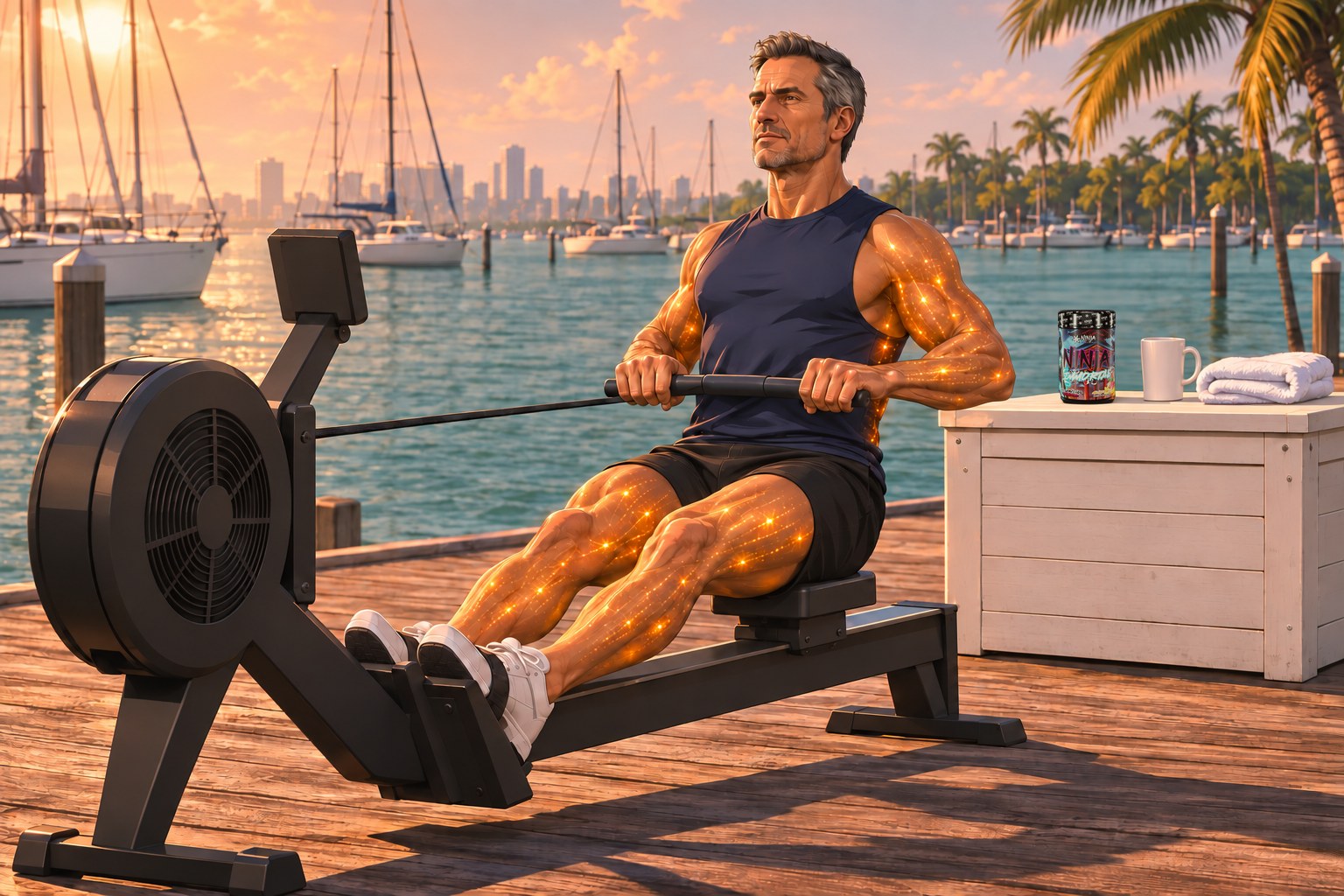
- Easy row or bike: 5 minutes at a pace where you could talk in full sentences. On the rower, legs drive first, then lean back, then pull.
- Row or bike intervals: 6 rounds of 1 minute hard and 2 minutes easy. Hard means a few words at a time, not sentences.
- Kettlebell swing: 4 x 12, 60 seconds rest. Hinge at the hips with your back flat, snap the hips forward and let the bell float to chest height; your arms are ropes, not levers.
- Walking lunge: 3 x 10 a leg, 60 seconds rest. A long step, the back knee lowers to just above the floor, the front knee stays over the foot.
- Cool-down: 5 minutes easy, then 2 minutes of slow breathing, in through the nose for four counts and out for six.
About 40 minutes, twice a week. The US Physical Activity Guidelines ask adults for 150 to 300 minutes of moderate or 75 to 150 minutes of vigorous aerobic activity a week, plus muscle work for every major muscle group on two or more days; this session counts toward both. Healthy adults: if you have an injury, pain, a heart condition, or you are new to training, check with your doctor before you start. Stop if it hurts.
Can CoQ10 Help You Recover From Hard Training?
This is where the trials agree most: they keep finding lower blood markers of muscle damage after hard training, though a lower marker is not the same as being ready to lift again. The 2024 dose-response meta-analysis (28 trials, 830 adults) found CoQ10 lowered creatine kinase by about 51 units per litre, and myoglobin and lactate dehydrogenase too; each extra 100 mg a day went with about 23 units less creatine kinase. Most of those trials ran in Asia, which the authors flagged as a limit.
A 2025 analysis of 17 trials in 440 athletes found the same direction, clearest for creatine kinase at 300 mg a day or more, at low to very low certainty. One example: 18 elite male kendo athletes training 5.5 hours a day for six days, on 300 mg a day or a placebo for 20 days (British Journal of Nutrition, 2008). On day three the CoQ10 group had less creatine kinase and myoglobin in their blood.
Does CoQ10 Help With Tiredness?
Modestly: a 2022 meta-analysis of 13 trials and 1,126 people found CoQ10 lowered fatigue scores, a small to moderate effect (Frontiers in Pharmacology). It pointed the same way in healthy people and in people with medical conditions, and bigger doses and longer use went with bigger drops. The effect was clear for CoQ10 on its own and not for products that mixed it with other ingredients. Ninja Immortal is a mix, so this evidence is for CoQ10 alone.
How Much CoQ10 Should You Take, and When?
Trials in athletes used 30 to 300 mg a day, taken daily for days to weeks; take it with a meal, because CoQ10 is fat-soluble and absorbs best with fat (Nutrients, 2023; Linus Pauling Institute).
| Study | Who | Daily dose | How long | What it found |
|---|---|---|---|---|
| Bike fatigue trial (Nutrition, 2008) | 17 healthy adults | 100 or 300 mg | 8 days | On 300 mg: top speed held better, less tired |
| Kendo training camp (British Journal of Nutrition, 2008) | 18 elite male athletes | 300 mg | 20 days | Less creatine kinase and myoglobin on day 3 |
| Muscle damage analysis (Clinical Nutrition ESPEN, 2024) | 28 trials, 830 adults | Varied | Varied | About 23 units less creatine kinase per extra 100 mg a day |
It is slow: blood levels peak about 6 hours after a dose and take about 33 hours to fall by half (Free Radical Research, 2006, authors from a CoQ10 maker). The trials dosed it daily, and in the 2025 analysis single doses showed no benefit.
Is CoQ10 Safe to Take Every Day?
For healthy adults at supplement doses, the record is good: no serious side effects have been reported, and a review of the trials put the observed safe level at 1,200 mg a day (NCCIH; Linus Pauling Institute; BioFactors, 2008, authors from a CoQ10 maker). The mild ones can be trouble sleeping and an upset stomach. The real watch-out is medication: CoQ10 may interact with the blood thinner warfarin and with insulin, so if you take either, or any prescription medication, ask your doctor first.
The Fuel Plan
| 80 kg (176 lb) lifter | 100 kg (220 lb) lifter | |
|---|---|---|
| Daily protein, 1.4 to 2.0 g per kg (ISSN) | 112 to 160 g | 140 to 200 g |
| CoQ10 from a normal diet | About 3 to 6 mg a day, from meat, poultry, fish, oils, nuts and seeds | |
| CoQ10 in food (Linus Pauling Institute) | Fried beef 2.6 mg and marinated herring 2.3 mg per 3 oz; fried chicken 1.4 mg per 3 oz; soybean oil 1.3 mg per tablespoon; roasted peanuts 0.8 mg per ounce | |
| 100 mg from food alone | About 38 servings of fried beef, over 7 lb of it | |
| When the scoop goes in | With breakfast or lunch, a meal with some fat in it: eggs, salmon, avocado, olive oil | |
| The scoop | One scoop of Ninja Immortal (13.53 g) in 8 to 10 oz of water, once a day | |
These are general numbers for healthy adults. With kidney disease, diabetes or any medical diet, ask your doctor or a registered dietitian. The protein side of the plate: How Much Protein Do You Need a Day?

Where Ninja Immortal Fits
One scoop of Ninja Immortal holds 100 mg of CoQ10, inside the 30 to 300 mg the athlete trials used, in a daily multivitamin you drink with breakfast: 13 vitamins and 8 minerals, 5,000 mg of bovine collagen peptides, 1,500 mg of glucosamine, 1,500 mg of MSM, 1,200 mg of chondroitin, 200 mg of turmeric root, and 126 mg of magnesium as bisglycinate (the form our magnesium guide covers).
We will not tell you 100 mg is the kendo camp’s 300 mg, or that you will feel it in your next set. What we will say: if you were going to take a multivitamin every morning anyway, this is the scoop that puts 100 mg of CoQ10 in it, taken with a breakfast that has some fat in it, the way a fat-soluble compound absorbs best, and every amount printed on the label. That is the multivitamin, the joint stack and the CoQ10 for $1.42 a day on Subscribe and Save.
Who it’s for: lifters 35 and up who want one daily scoop that covers the multivitamin, the joint support ingredients and 100 mg of CoQ10. Who it’s not for: anyone after a pre-workout kick (there is no caffeine on the label), vegans (the collagen is bovine), anyone pregnant, nursing or under 18, and anyone on warfarin, insulin or other prescription medication without their doctor’s yes.
Ninja Immortal: The Doses This Article Is About
Per serving, 1 scoop (13.53 g), straight from the label. The full label is on the product page.
| Coenzyme Q10 | 100mg |
| Glucosamine Sulfate | 1500mg |
| MSM (Methylsulfonylmethane) | 1500mg |
| Turmeric Root Powder | 200mg |
| Magnesium (as Magnesium Bisglycinate Chelate) | 126mg |
The numbers: $49.99 for 30 scoops is $1.67 a scoop, or $1.42 with Subscribe and Save (15% off: $42.49 a tub each month, three deliveries to start, then cancel any time). Three deliveries are 90 scoops, about 13 weeks of a scoop a day, far past the 8 and 20 days of the trials above. In stock today: Berry Blast, Citrus Splash and Mango Crush.
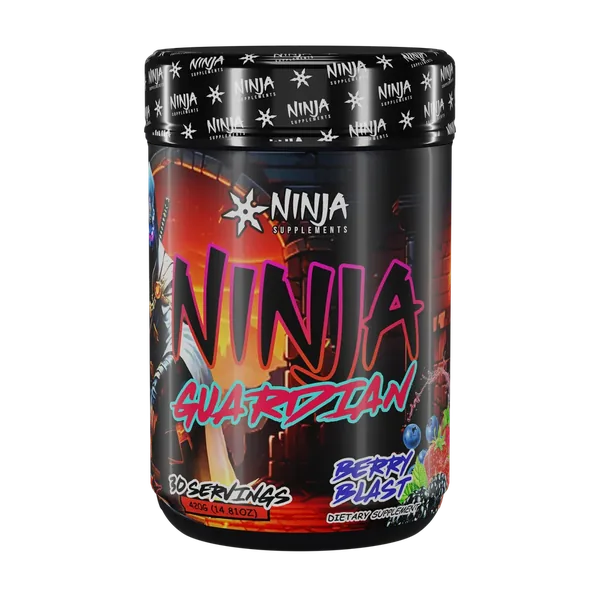
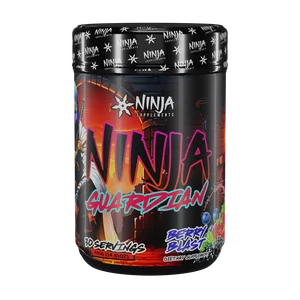
Most often bought with it: Ninja Guardian, our daily greens and reds. The product page’s own pairing is one scoop of each in 16 oz of water.
Through Monday 30 November, 11:59 PM Eastern, Ninja Immortal is in The Heist: pick any three from the lineup and the lowest priced one is free, applied in your cart with no code. Ninja Gains is not included, and The Heist does not combine with Subscribe and Save.
Great product- tastes good and a great source of vitamins
I love it! It does what it says on the container and all the flavors taste great!
This tastes amazing. Best way to take your vitamins.
Ninja Immortal is made in a facility that processes other products which may contain dairy, wheat, nuts, soy, fish and eggs. If you take prescription medication, check with your doctor first. Free US shipping starts at $150.
Frequently Asked Questions
Does CoQ10 really work?
For raising your blood levels, yes, consistently. For performance in healthy people, a little and not reliably; for muscle damage markers after hard training and for tiredness scores, the trials point the right way with modest effects. Most of that evidence is rated low or very low certainty.
Is taking CoQ10 daily good for you?
For healthy adults the safety record is good: no serious side effects reported, and an observed safe level of 1,200 mg a day. The trials that found benefits gave it daily for days to weeks. If you take warfarin, insulin or any prescription medication, ask your doctor first.
Should you take CoQ10 in the morning or at night?
None of the trials we read tested morning against night. What matters is taking it with a meal that has some fat in it, because CoQ10 is fat-soluble. Mild sleep trouble is one of the side effects the NIH lists, so breakfast or lunch is the simple choice.
What lowers CoQ10 in the body?
Age, for one: in a study of human organs, levels in most organs peaked around 20 and fell after. Cholesterol-lowering statins can lower blood CoQ10 too, though there is no evidence that causes side effects. If you take a statin, ask your doctor before adding CoQ10.
Is ubiquinol better than CoQ10?
Ubiquinol is CoQ10 too, in its reduced form. In one trial of 10 older men on 200 mg a day with a meal, ubiquinol raised blood CoQ10 from 1.3 to 3.4 µmol/L while the rise on ubiquinone was not significant; neither form changed the oxidative stress markers it measured, and it is one small trial. Ninja Immortal’s label lists its CoQ10 as Coenzyme Q10.
Can you get enough CoQ10 from food?
Enough to avoid running short, yes: healthy people make their own and eat about 3 to 6 mg a day. Not supplement amounts, though: 100 mg is about 38 servings of fried beef.
Next read: Do Collagen Supplements Actually Work?, for the 5,000 mg of collagen in the same Ninja Immortal scoop and what the joint trials found. And when the daily foundation needs one scoop instead of a handful of pills, Ninja Immortal is the tub.
Sources
- Deng H, et al. Coenzyme Q10 supplementation increases blood concentrations but shows limited and inconsistent effects on exercise performance: a systematic review and meta-analysis. British Journal of Nutrition, 2025.
- Talebi S, et al. The effects of coenzyme Q10 supplementation on biomarkers of exercise-induced muscle damage, physical performance, and oxidative stress: A GRADE-assessed systematic review and dose-response meta-analysis of randomized controlled trials. Clinical Nutrition ESPEN, 2024.
- Qu H, Qu Y. Can coenzyme Q10 supplementation reduce exercise-induced muscle damage and oxidative stress in athletes? A systematic review and meta-analysis. Complementary Therapies in Clinical Practice, 2025.
- Tsai IC, et al. Effectiveness of Coenzyme Q10 Supplementation for Reducing Fatigue: A Systematic Review and Meta-Analysis of Randomized Controlled Trials. Frontiers in Pharmacology, 2022.
- Mizuno K, et al. Antifatigue effects of coenzyme Q10 during physical fatigue. Nutrition, 2008.
- Kon M, et al. Reducing exercise-induced muscular injury in kendo athletes with supplementation of coenzyme Q10. British Journal of Nutrition, 2008.
- Fernandes MSS, et al. Coenzyme Q10 Supplementation in Athletes: A Systematic Review. Nutrients, 2023.
- Kalén A, Appelkvist EL, Dallner G. Age-related changes in the lipid compositions of rat and human tissues. Lipids, 1989.
- Bhagavan HN, Chopra RK. Coenzyme Q10: absorption, tissue uptake, metabolism and pharmacokinetics. Free Radical Research, 2006 (authors from a CoQ10 maker).
- Zhang Y, et al. Ubiquinol is superior to ubiquinone to enhance Coenzyme Q10 status in older men. Food and Function, 2018.
- Hidaka T, et al. Safety assessment of coenzyme Q10 (CoQ10). BioFactors, 2008 (authors from a CoQ10 maker).
- Pravst I, Zmitek K, Zmitek J. Coenzyme Q10 contents in foods and fortification strategies. Critical Reviews in Food Science and Nutrition, 2010.
- Jäger R, et al. International Society of Sports Nutrition Position Stand: protein and exercise. Journal of the International Society of Sports Nutrition, 2017.
- National Center for Complementary and Integrative Health (NIH). Coenzyme Q10.
- Linus Pauling Institute, Oregon State University. Coenzyme Q10. Micronutrient Information Center.
- US Department of Health and Human Services. Physical Activity Guidelines for Americans, 2nd edition.
- Search volumes: Google Ads Keyword Planner and Bing Webmaster keyword research, United States, 2026.
How we wrote this: we picked this topic because “CoQ10” is searched about 246,000 times a month in the US and Google’s first page is written for patients, not lifters. We read the meta-analyses and trials above, kept mainly to studies in healthy people and athletes, said so where one mixed in people with medical conditions, and checked every Ninja Immortal dose against the product label and the live store. These statements have not been evaluated by the Food and Drug Administration. This product is not intended to diagnose, treat, cure, or prevent any disease.