

Walk into any supplement store and you’ll find shelves stacked with pre-workout powder promising the world. But here’s the uncomfortable truth: most gym-goers have no idea what’s actually in their scoop — or whether those ingredients are dosed high enough to do anything meaningful. According to research published by the National Institutes of Health, many popular pre-workout supplements contain subtherapeutic doses of key ingredients, meaning you’re paying for labels, not results.
That ends today. This is a straight-up, science-based breakdown of the pre-workout ingredients that actually move the needle — what they do, why they work, and what doses you should be looking for before you commit to a product. No fluff, no mystery blends. Just transparency and performance.
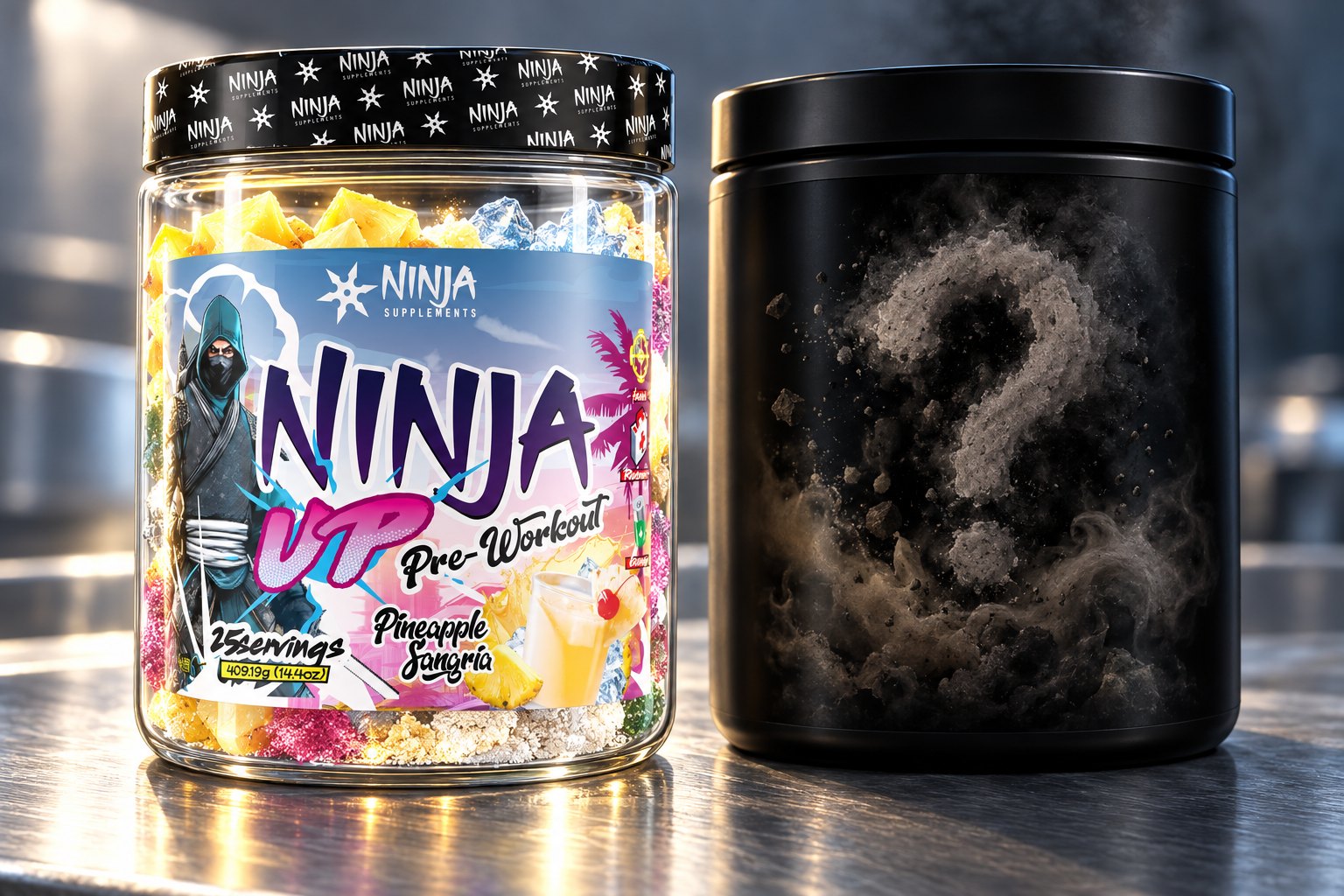
The concept of “proprietary blends” has plagued the supplement industry for years. Brands list a blend with a total weight but hide individual ingredient amounts. If a blend says “Energy Matrix 3,000mg” with five ingredients, you have no idea how much of each you’re actually getting. That’s the opposite of clinically dosed ingredient transparency — and it’s exactly the kind of thing serious athletes should avoid.
When you understand the science behind each ingredient and know what clinical doses look like, you can evaluate any pre-workout supplement with confidence. Let’s break it down.
Caffeine is the most studied performance-enhancing compound in sports nutrition. Full stop. It works by blocking adenosine receptors in the brain, reducing perceived fatigue and elevating alertness, reaction time, and endurance output. For high stim pre-workout users especially, caffeine anhydrous (the dehydrated, fast-absorbing form) is non-negotiable.
Clinically effective doses range from 150mg to 300mg per serving for most trained athletes. Some high-stimulant formulations push to 400mg+. The key is knowing your tolerance — and respecting it. More isn’t always better, but underdosing caffeine is just as common a problem as overdosing it.
That familiar tingling sensation on your skin? That’s beta-alanine doing its job. Beta-alanine increases muscle carnosine levels, which acts as a buffer against acid buildup during high-intensity training. The result: you can push harder, longer before hitting that burning wall.
The research-backed dose is 3.2g to 6.4g per day. Single-serving pre-workouts that contain at least 3.2g are hitting the minimum effective threshold. Anything less, and you’re likely paying for placebo-level tingling. Consistent daily use over several weeks compounds the carnosine-loading effect, so don’t skip days.
L-Citrulline is arguably the most underrated ingredient in pre-workout supplements. It converts to L-arginine in the kidneys, which drives nitric oxide production and expands blood vessels — delivering more oxygen and nutrients to working muscles. The result is enhanced pumps, better endurance, and reduced muscle soreness post-session.
Look for 6g to 8g of L-Citrulline (not citrulline malate, where the dosing math changes) per serving. Studies published in the Journal of the International Society of Sports Nutrition consistently support this dose range for meaningful performance improvements. If your pre-workout powder lists “citrulline malate 3g,” you’re likely getting less than 2g of actual citrulline — not enough.
Creatine monohydrate is the most researched supplement in the history of sports science. It works by replenishing ATP (your muscles’ primary energy currency) faster during explosive, high-intensity efforts. More ATP availability means more reps, more weight, and more power output.
The effective dose is 3g to 5g daily, and while creatine doesn’t need to be in your pre-workout specifically, many quality formulas include it. What matters most is consistency — creatine works through saturation of muscle stores over time, so daily intake (regardless of training schedule) is key to maximizing pre-workout benefits.
Betaine (trimethylglycine) doesn’t get nearly enough credit. It supports creatine synthesis, promotes cellular hydration, and has been shown in multiple studies to improve muscular endurance and power output. It works synergistically with creatine to help you crush your workout with more sustained force production.
Look for 2.5g per serving — that’s the dose used in the most compelling research. Anything under 1.5g is likely underdosed and won’t produce measurable performance benefits.
Caffeine handles raw energy, but L-Tyrosine handles the mental side of performance. It’s a precursor to dopamine, norepinephrine, and epinephrine — neurotransmitters that govern focus, motivation, and stress response. Under demanding training conditions, L-Tyrosine helps maintain cognitive sharpness when physical fatigue sets in.
Effective doses range from 500mg to 2,000mg, with higher doses particularly relevant for high stim pre-workout formulas or training sessions requiring intense concentration. For athletes exploring the crossover between physical performance and mental acuity, our nootropics and focus guide breaks this down in even greater depth.
It’s easy to focus exclusively on stimulants and nitric oxide boosters while ignoring the basics. Sodium, potassium, and magnesium are critical for muscle contraction, nerve signaling, and hydration — all of which directly impact performance. A quality pre-workout powder should include meaningful electrolyte support, especially for athletes training in demanding conditions or sweating heavily.
Without adequate electrolytes, even the most loaded stimulant profile will fall flat as your body struggles to maintain proper fluid balance and muscle function.
Not every ingredient on a label deserves your respect. Watch out for these:
When in doubt, demand full label transparency. If a company won’t show you their exact doses, that tells you everything you need to know.
The best approach to pre-workout supplements is layered: start with a clinically dosed pre-workout formula as your foundation, then consider whether additional targeted ingredients (like creatine monohydrate taken separately) help you fill any gaps. For athletes pursuing both energy and physique goals, exploring how pre-workout supplements fit alongside your broader nutrition plan is essential.
If fat loss is also in focus, some athletes strategically pair pre-workout timing with their goals — our fat burner supplement guide covers how thermogenic ingredients interact with training performance without undermining your energy levels.
The most evidence-backed pre-workout ingredients are caffeine anhydrous (150-300mg), L-citrulline (6-8g), beta-alanine (3.2g+), creatine monohydrate (3-5g), betaine anhydrous (2.5g), and L-tyrosine (500-2,000mg). These ingredients have consistent clinical support for improving energy, endurance, pumps, strength, and focus when dosed appropriately.
A properly dosed pre-workout will show all individual ingredient amounts on the label — no proprietary blends. Compare each ingredient to its clinically studied dose range. If a key ingredient like citrulline shows less than 4g or beta-alanine shows less than 3g, the product is likely underdosed for meaningful performance impact.
High stim pre-workout formulas typically contain higher caffeine doses (often 300mg+), additional stimulatory compounds like L-tyrosine or other focus agents, and are designed for athletes with higher stimulant tolerance who need a more aggressive energy response. Standard pre-workouts are better suited for beginners or those sensitive to stimulants.
Most pre-workout supplements are best consumed 20 to 30 minutes before training. This allows caffeine and other active ingredients to reach peak plasma concentrations as you begin your session. Avoid taking high-stimulant pre-workouts within 5-6 hours of sleep to prevent disruption to recovery quality.
Daily pre-workout use is common, but cycling off periodically (every 6-8 weeks) helps prevent caffeine tolerance buildup. Non-stimulant ingredients like creatine and beta-alanine benefit from daily use regardless. If you’re using a high stim pre-workout, cycling becomes even more important for maintaining sensitivity and supporting cardiovascular health.
The supplement industry is noisy. Bold labels, extreme claims, and mystery blends compete for your attention every time you walk into a gym or scroll through your feed. But you’re smarter than that — and now you’re armed with the science to prove it.
The pre-workout ingredients that actually work aren’t secrets. They’re well-researched, transparently dosed compounds that have earned their place through rigorous study. Caffeine, citrulline, beta-alanine, creatine, betaine, tyrosine — when these are dosed correctly and combined intelligently, the performance difference is real and measurable.
At Ninja Supplements, our commitment to science-backed supplement education means you’ll never have to guess what’s in your formula or whether it’s going to perform. Every ingredient has a reason. Every dose has a purpose. That’s what it means to maximize performance the right way.
Ready to find your edge? Explore our full pre-workout breakdown and discover what clinically dosed transparency actually looks like in practice.