

Yes, a little, and only some of them. Of the three main ingredients, citrulline and dietary nitrate have the better record: in meta-analyses of 12 studies for citrulline and 80 for nitrate, each beat a placebo on exercise performance by a small margin. Plain arginine, the ingredient these supplements have been marketed on, has not shown it can do the same.
“Nitric oxide booster” is typed into Google about 27,100 times a month in the US, and “best nitric oxide supplements” another 8,100. Most of what comes back is a shop listing or a promise. So here is what the trials measured, which ingredients earned their place, and how to use one in a real session.
The Short Version
- Citrulline helps a little: a small benefit to high-intensity strength and power over placebo in 12 studies and 198 people, using at least 3 g taken 30 minutes or more before testing (Sports Medicine, 2019).
- It can make training feel easier: in a meta-analysis of 13 studies and 206 people, citrulline lowered how hard sessions felt and soreness 24 hours later (seven studies each); the most common dose was 8 g of citrulline malate (Journal of Sport and Health Science, 2020).
- Nitrate works, modestly: exercise performance improved over placebo across 80 studies, with a small effect, but not in well-trained endurance athletes (Medicine and Science in Sports and Exercise, 2020).
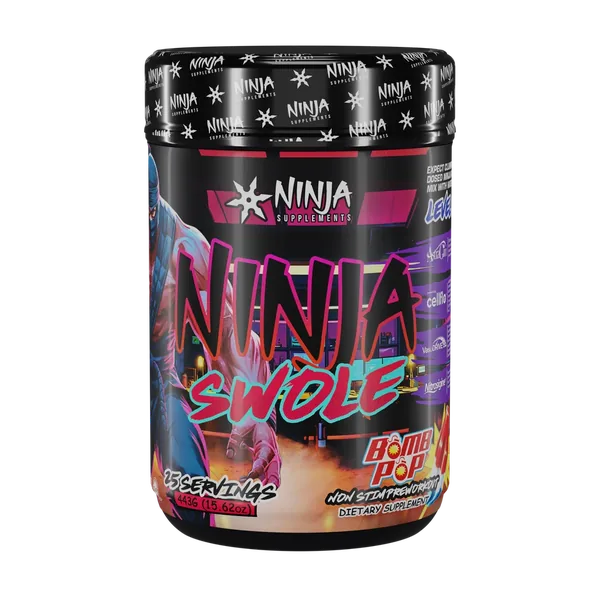
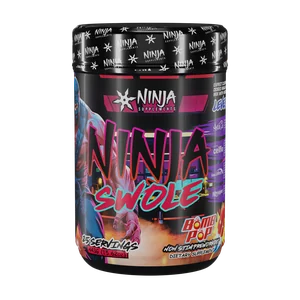
- Ninja Swole holds 7,000 mg of L-citrulline malate 2:1 a scoop, about 4.7 g of citrulline at that ratio, above the 3 g minimum the 2019 meta-analysis set.
What Does a Nitric Oxide Booster Actually Do?
It gives your body the raw materials to make more nitric oxide, a gas that relaxes the walls of your blood vessels so more blood can reach working muscle. A 2023 review of the strength research lays out two routes. One runs from the amino acid arginine; citrulline feeds that route by turning into arginine. The other runs from nitrate, found in high amounts in leafy greens such as spinach and arugula, and in beets. A “nitric oxide booster” is any supplement built on one or both.
The theory is simple: more blood flow, more oxygen and fuel in, more waste out, and a better set. Whether a given ingredient delivers depends on whether it actually raises nitric oxide in a human, and whether that shows up on the bar. That is where the ingredients split.
Does Citrulline Work?
Yes, modestly, and it has a meta-analysis aimed squarely at lifting. A 2019 meta-analysis in Sports Medicine pooled 12 placebo-controlled studies and 198 healthy men and women doing resistance sets or sprints of 30 seconds or less. Citrulline beat placebo with a small effect size of 0.20. The authors were blunt: the effect is small, and in every single study the confidence interval crossed the line of no effect. They added that it may still matter to high-level athletes, whose contests are decided by small margins. For the rest of us, it is a small edge, not a new max.
A 2020 meta-analysis of 13 studies and 206 people found citrulline taken within two hours before exercise lowered how hard the session felt and cut soreness 24 hours later, without changing blood lactate. By 48 and 72 hours, the soreness difference was no longer significant. The most common dose in those studies was 8 g of citrulline malate.
Why citrulline and not arginine? Absorption. In a 2008 study of 20 healthy volunteers who took each for a week, oral citrulline raised blood arginine more effectively than arginine itself, because much of a swallowed arginine dose is broken down in the gut before it reaches the blood. Think of it as the express lane on I-95: same destination, and more of it actually arrives. The limit: no dose in that study improved blood vessel widening, so it shows better absorption, not a better workout.

Does Arginine Work?
On its own, the evidence is thin. A 2011 review in Sports Medicine found only five single-dose studies on exercise performance, three of them positive, and eight longer studies split four and four. Its conclusion: it is still premature to recommend arginine as a performance aid for healthy, active people. In a 2012 trial, 6 g of arginine raised blood volume in the working muscle of 15 men between sets, but did not raise their blood nitric oxide markers or improve their strength.
A different form, arginine bonded to silicate and stabilised with inositol (trade name Nitrosigine), has one promising trial of its own. In 2020, 24 healthy young adults took 1.5 g of it, 8 g of citrulline malate or a placebo on separate days. An hour later, blood vessel widening measured by ultrasound rose 31% with the arginine silicate and 34% with the citrulline malate, against a 2% drop with placebo. That trial measured blood vessels, not lifts, so it shows the mechanism working, not a bigger bench.
Does Beet Juice Work for Training?
Yes, a little. Nitrate takes the other route to nitric oxide, and concentrated beetroot juice is the form it has most often been tested in, according to the 2023 review. A 2020 meta-analysis in Medicine and Science in Sports and Exercise pooled 80 placebo-controlled studies in young, healthy adults: exercise performance improved with nitrate, with a small effect (0.17). The benefit showed up in recreationally active men, did not show up in the six studies of women only, and disappeared in the 26 studies of well-trained endurance athletes. If you train hard but are not an elite endurance athlete, it may give you a little.
Most of your nitrate already comes off the plate. About 80% of the nitrate people eat comes from vegetables, according to a 2009 review in the American Journal of Clinical Nutrition, which is why greens are in the Fuel Plan below.
Does a Bigger Pump Mean More Muscle?
Not proven. The pump is real: more blood in the working muscle between sets is exactly what the 2012 arginine trial measured. But that same trial found no change in strength, and none of the studies above shows that a bigger pump on its own builds more muscle over months. What builds muscle is training hard and progressively, with enough protein. A booster is a small edge on top of that, and the pump is the nice feeling that comes with it.
Coach’s Corner: The Pump Finisher
- Time the scoop: take it 30 to 60 minutes before you train. The citrulline trials allowed at least 30 minutes, and the 2020 blood vessel trial measured at 60.
- Warm up: 5 minutes on a bike or rower at an easy pace, then 2 light sets of your first lift.
- Do your main lifts as normal. Then the finisher, at the ACSM’s numbers for muscular endurance work: light to moderate weight (about 40 to 60% of your one-rep max), more than 15 reps, under 90 seconds of rest:
- Cable or band triceps pushdown: 3 x 20, 30 to 45 seconds rest. Elbows pinned to your sides.
- Dumbbell curl: 3 x 20, 45 seconds rest. No swinging; lower for a slow count of two.
- Dumbbell lateral raise: 3 x 20, 30 to 45 seconds rest. Soft elbows, raise to shoulder height and no higher. On all three: beat 20 by a rep or two, then add 2 to 10% next time (the ACSM rule).
Healthy adults: if you have an injury, pain, a heart condition, or you are new to training, check with your doctor before you start. Stop if it hurts.
The Fuel Plan
| 80 kg (176 lb) lifter | 100 kg (220 lb) lifter | |
|---|---|---|
| Daily protein, 1.6 to 2.2 g per kg (the full math: how much protein you need a day) | 128 to 176 g | 160 to 220 g |
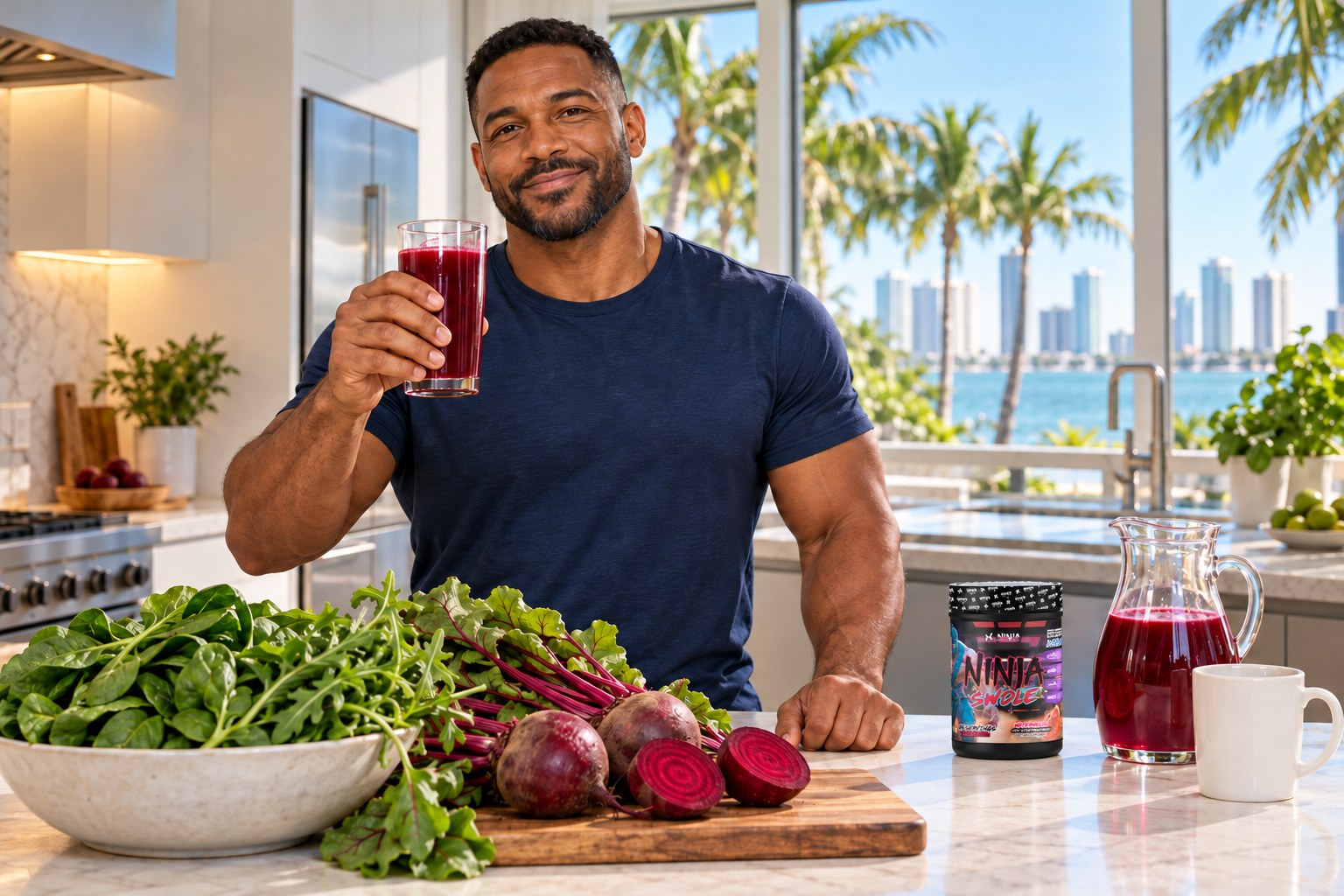
| Food first: nitrate | About 80% of the nitrate people eat comes from vegetables (2009 review). Leafy greens such as spinach and arugula, and beets, are high in it (2023 review): put them on the plate most days. | |
| Before training | One scoop of Ninja Swole in 8 to 10 oz of water, 30 to 60 minutes before the session, with a meal or snack that holds about 0.4 g of protein per kg (32 g at 80 kg, 40 g at 100 kg) in the hours around it | |
These are general numbers for healthy adults. With kidney disease, diabetes or any medical diet, ask your doctor or a registered dietitian.
Where Ninja Swole Fits
If you want citrulline and Nitrosigine in one scoop, without a stimulant kick, Ninja Swole is built that way. 7,000 mg of L-citrulline malate 2:1 a scoop, about 4.7 g of citrulline: above the 3 g minimum of the 2019 meta-analysis and a little under the 8 g of citrulline malate the soreness studies used most. Plus 1,500 mg of Nitrosigine, the exact 1.5 g dose tested in the 2020 trial.
The label calls it a non-stim pre-workout and our store calls it stim free, which makes it the tub for the evening session, the second session of the day, or the lifter who has had his coffee already. Straight talk: the tub also carries 254 mg of VasoDrive-AP, casein peptides, and we found no trial showing it helps you lift more, so we are not selling it to you on that.
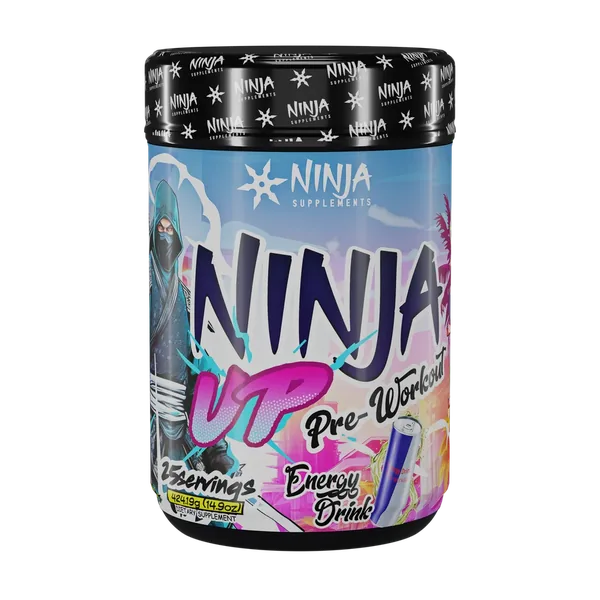
Who it’s for: lifters who want the pump from a non-stim scoop (the label’s word): evening training, a second session, the caffeine sensitive. Who it’s not for: anyone who wants a stimulant kick (that is Ninja Up), and anyone on prescription medication for blood pressure or their heart without their doctor’s yes.
Ninja Swole: The Doses This Article Is About
Per serving, straight from the label. The full label is on the product page.
| L-Citrulline Malate 2:1 | 7000 mg |
| Nitrosigine® as Inositol-Stabilized Arginine Silicate | 1500 mg |
| VasoDrive-AP® (Hydrolysed Casein Tripeptides) | 254 mg |
The numbers: $49.99 for 25 scoops is $2.00 a scoop, or $1.70 with Subscribe and Save (15% off, $42.49 a tub). All three flavours are in stock: Bomb Pop, Rainbow Candy and Watermelon.
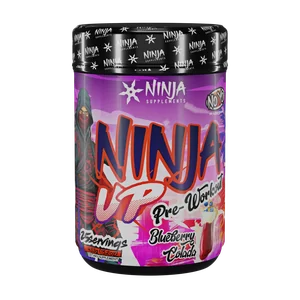
The tub people most often buy with Ninja Swole is Ninja Up, our high-stim pre-workout: Ninja Up for the mornings you want the kick, Ninja Swole for the nights you don’t.
I have tried many pre workouts on the market This is hands down my favorite. I have tried and used all three lines of Ninja pre workouts for years and ALL of them are great! Flavors are spot on and I like the Non-Stim for more of a daily use vs. high stem or regular, but rotate all of them. Easily the best supplement line on the market. . . . .
The longer I worked out the tighter my shirt got which tells me 2 things. One, the pump was as advertised and more and two, the focus and endurance was on point giving the length of my workout. 5 stars all the way
This is the best non Stim Preworkout I’ve ever had. I never ran out of a tub quicker than before. This really does give you amazing endurance!
If you take prescription medication, especially for blood pressure or your heart, check with your doctor first. Not for anyone under 18, pregnant or nursing.
Frequently Asked Questions
What do nitric oxide boosters do?
They supply the raw materials your body uses to make nitric oxide, which relaxes blood vessels so more blood can reach working muscle. The main ones are citrulline and arginine, which use one route, and nitrate from foods such as beetroot, which uses another. Of the three, citrulline and nitrate have the better evidence; plain arginine the weakest.
What is the best nitric oxide booster ingredient?
For lifting, citrulline: a 2019 meta-analysis of 12 studies found a small benefit to strength and power, and a 2020 one found lower effort and less soreness the next day. Nitrate improved exercise performance slightly across 80 studies (2020). Plain arginine did not show a reliable benefit in a 2011 review.
When should you take a nitric oxide booster?
About 30 to 60 minutes before you train. The 2019 citrulline meta-analysis included only doses taken at least 30 minutes before testing, and a 2020 trial measured the effect on blood vessels 60 minutes after the dose.
Are nitric oxide boosters safe?
For healthy adults at the doses studied, few side effects are reported. A 2023 review found citrulline well tolerated in single doses up to 15 g and nitrate generally well tolerated (beet juice can turn urine pink), and a 2011 review found arginine doses of 20 g or less well tolerated in healthy people. Because these ingredients act on blood vessels, anyone taking prescription medication for blood pressure or the heart should ask their doctor first.
Is beet juice a nitric oxide booster?
Yes. Beets are high in nitrate, which the body turns into nitric oxide by a different route from citrulline and arginine, and concentrated beetroot juice is the form nitrate has most often been tested in. Across 80 studies, nitrate gave a small exercise performance benefit in recreationally active young men, but not in well-trained endurance athletes (2020).
Do nitric oxide boosters build muscle?
Not on the evidence so far. Citrulline gave a small boost to strength and power in single sessions, and arginine increased muscle blood volume without improving strength. Muscle comes from hard, progressive training and enough protein; a booster is a small edge on top.
Next read: Pump vs Stimulant Pre-Workout: What’s the Difference?, if you are deciding between a pump and a kick. And for the pump without the stims, Ninja Swole is the tub.
Sources
- Trexler ET, et al. Acute Effects of Citrulline Supplementation on High-Intensity Strength and Power Performance: A Systematic Review and Meta-Analysis. Sports Medicine, 2019.
- Rhim HC, et al. Effect of citrulline on post-exercise rating of perceived exertion, muscle soreness, and blood lactate levels: A systematic review and meta-analysis. Journal of Sport and Health Science, 2020.
- Senefeld JW, et al. Ergogenic Effect of Nitrate Supplementation: A Systematic Review and Meta-analysis. Medicine and Science in Sports and Exercise, 2020.
- Gonzalez AM, et al. Supplementation with Nitric Oxide Precursors for Strength Performance: A Review of the Current Literature. Nutrients, 2023 (two authors work for or advise supplement makers).
- Schwedhelm E, et al. Pharmacokinetic and pharmacodynamic properties of oral L-citrulline and L-arginine: impact on nitric oxide metabolism. British Journal of Clinical Pharmacology, 2008.
- Álvares TS, et al. L-Arginine as a potential ergogenic aid in healthy subjects. Sports Medicine, 2011.
- Alvares TS, et al. Acute l-arginine supplementation increases muscle blood volume but not strength performance. Applied Physiology, Nutrition, and Metabolism, 2012.
- Rogers JM, Gills J, Gray M. Acute effects of Nitrosigine® and citrulline malate on vasodilation in young adults. Journal of the International Society of Sports Nutrition, 2020.
- Hord NG, Tang Y, Bryan NS. Food sources of nitrates and nitrites: the physiologic context for potential health benefits. American Journal of Clinical Nutrition, 2009.
- American College of Sports Medicine. American College of Sports Medicine position stand. Progression models in resistance training for healthy adults. Medicine and Science in Sports and Exercise, 2009.
How we wrote this: we wrote this page because “nitric oxide booster” is searched about 27,100 times a month in the US and “best nitric oxide supplements” another 8,100 (Google Ads Keyword Planner, September 2026), and the top question Google shows for it is what these boosters actually do. We read the meta-analyses, trials and reviews above, checked every Ninja Swole dose against its label, and took the price and flavours from the store on 28 October 2026. These statements have not been evaluated by the Food and Drug Administration. This product is not intended to diagnose, treat, cure, or prevent any disease.