
Take a caffeinated pre-workout 30 to 60 minutes before your first working set, with 60 minutes the timing the research uses most. Caffeine peaks in the blood 30 to 120 minutes after you swallow it, according to the International Society of Sports Nutrition, and the citrulline studies dosed 40 to 60 minutes out. The catch is the other end of the day: caffeine’s half-life averages 4 to 6 hours, so a late scoop can follow you to bed.
Timing is the cheapest upgrade in the tub: same scoop, better result. And it has a second half most guides skip, which is when to stop. Both are below, with the numbers.
The Short Version
- The peak: caffeine reaches its highest blood level 30 to 120 minutes after you take it by mouth (ISSN position stand, 2021).
- The habit in the studies: 60 minutes before exercise is the most common caffeine timing (ISSN, 2021); citrulline malate was taken 40 to 60 minutes before (meta-analysis of 8 studies, 2021).
- The cutoff: 400 mg of caffeine taken even 6 hours before bed still disturbed sleep in a 2013 trial (Journal of Clinical Sleep Medicine), and a 2023 meta-analysis of 24 studies found caffeine cut total sleep by 45 minutes (Sleep Medicine Reviews).
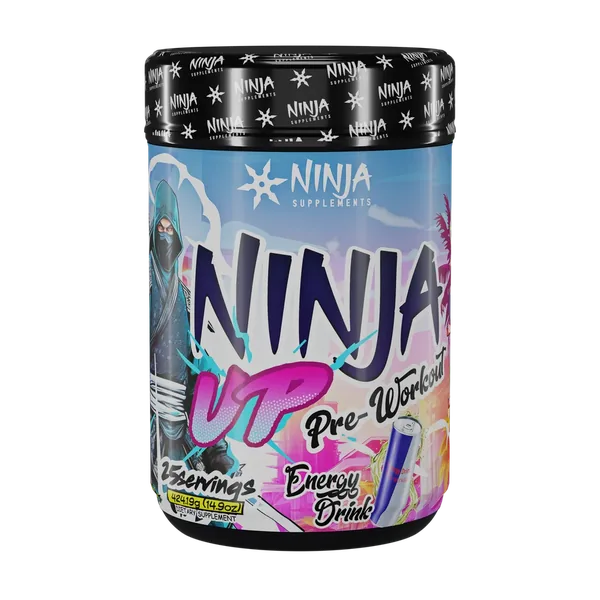
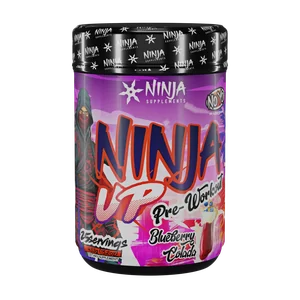
- Ninja Up lists Caffeine Anhydrous 300 mg plus Infinergy 135 mg and 6000 mg of L-citrulline malate 2:1 a scoop, so its timing follows the caffeine: about 60 minutes before training.
How Long Before a Workout Should You Take Pre-Workout?
About 60 minutes for a caffeinated scoop, and at least 30, since caffeine peaks 30 to 120 minutes after you take it. The ISSN position stand explains why 60 is the habit: it is roughly when plasma caffeine is believed to peak. Each ingredient has its own clock, though, and they do not all run on the day of the session.
| Ingredient | When | Why |
|---|---|---|
| Caffeine | 30 to 60 minutes before | Peaks 30 to 120 minutes after you take it; 60 minutes is the most common study timing (ISSN, 2021) |
| Citrulline malate | 40 to 60 minutes before | The window used in the 8 studies of the 2021 meta-analysis |
| Beta-alanine | Every day, ideally with a meal | It works by building up: 4 to 6 g a day for 2 to 4 weeks, and loading with a meal raised muscle carnosine further (ISSN, 2015) |
| Your last caffeine | At least 6 hours before bed | 400 mg at 6 hours before bed still cut sleep (2013 trial) |
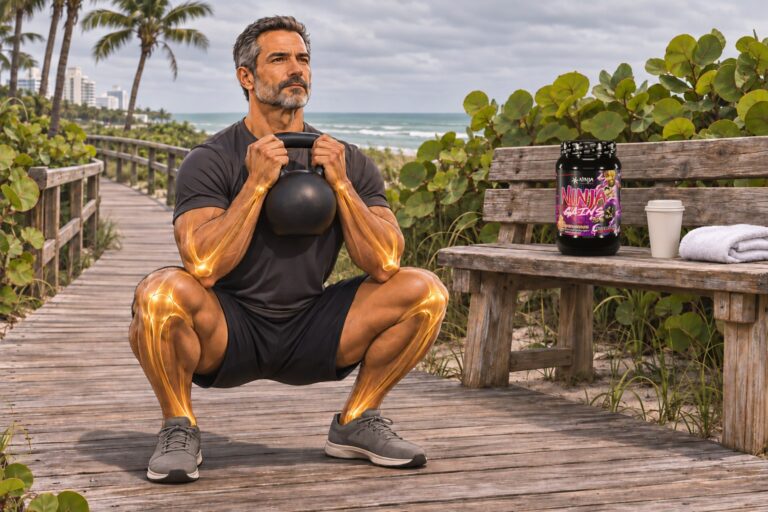
So the scoop goes down at T minus 60, the warm-up starts around T minus 15, and your first working set lands inside the caffeine peak window. Think of it like timing a getaway on Ocean Drive: leave too early and you are idling at the light; leave too late and you hit the traffic.
How Long Does Pre-Workout Take to Kick In?
Caffeine shows up in your blood within minutes, but it peaks somewhere between 30 and 120 minutes after you take it, according to the ISSN position stand. That spread is real: the same review puts caffeine’s average half-life at 4 to 6 hours, with a range of 1.5 to 10 hours between adults. Genes and habits both move the needle.
The form matters too. The ISSN notes caffeine gum can work faster than capsules, so the 60-minute rule is a starting point for a drink or a capsule, not a law. Run the test on yourself: note when you feel it on two or three sessions, then set your own clock inside the 30 to 60 minute window.
Is Morning or Evening Better for Pre-Workout?
Morning is where caffeine earns its keep, and evening is where it costs you. In a 2012 trial, 12 highly resistance-trained men were 3.0% to 7.5% stronger and more powerful in a 6 PM session than at 10 AM. When they took 3 mg of caffeine per kg of body weight before the 10 AM session, most of their strength and power measures rose 4.6% to 5.7% above the morning placebo, back up to their evening levels.
So if you lift before work, a caffeinated scoop 60 minutes out is doing its best job. If you lift after work, the same scoop is borrowing from your night. That trade is the next question.

Can You Take Pre-Workout at Night?
You can take a stim-free one at night; a caffeinated one late in the day is a bet against your sleep. In the 2013 trial, a 400 mg dose of caffeine disturbed sleep whether it was taken at bedtime, 3 hours before or 6 hours before, and the authors backed a minimum of 6 hours without substantial caffeine before bed. A 2023 meta-analysis of 24 studies went further: caffeine cut total sleep by 45 minutes, and to protect total sleep time, the authors put a typical 217.5 mg pre-workout serving at least 13.2 hours before bedtime.
- The minimum: 6 hours. Bed at 10:30 PM means the last caffeinated scoop by 4:30 PM.
- The cautious line: 13.2 hours for a 217.5 mg serving, which is a morning-only rule for most people.
- The athlete data: a 2025 meta-analysis of 10 studies (128 athletes) found evening caffeine caused a small drop in measured sleep efficiency that did not hold up in every check, while the athletes consistently reported their sleep as much worse.
The ISSN position stand describes one small study in which morning caffeine disturbed sleep in 1 of 13 people, while caffeine at 6 PM disturbed it in 6. If your sessions start after work, the stim-free route is the clean answer: here is how a pump pre-workout compares with a stimulant one. And if a scoop leaves you wired at any hour, read why pre-workout makes you jittery and how to stop it.
Should You Take Pre-Workout on Rest Days?
Not for the caffeine; possibly for the beta-alanine. Caffeine works on the day you take it, so a rest day needs none. Beta-alanine is different: the ISSN’s dose is 4 to 6 g every day for at least 2 to 4 weeks, because it works by building up carnosine in the muscle.
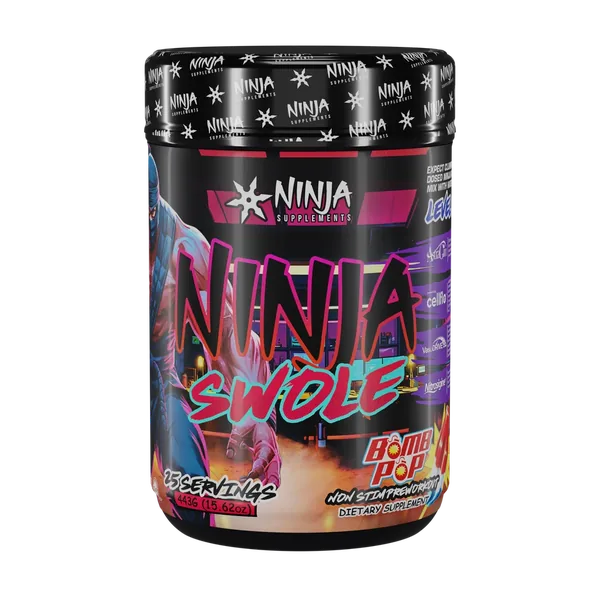
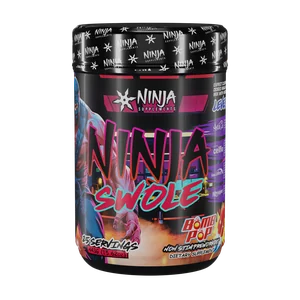
A caffeinated scoop on a rest day means a dose of caffeine for a few grams of beta-alanine, which is a poor trade. If daily beta-alanine matters to you, a stim-free scoop covers part of it without the caffeine: Ninja Swole holds 3200 mg of beta alanine, a little under the 4 to 6 g studied, and no caffeine row. Still choosing a tub? Here is which pre-workout is right for you.
Coach’s Corner: The 60-Minute Countdown
- T minus 60, the scoop: mix it and finish it within a few minutes, then pack your bag. Note the time; it sets your caffeine cutoff for the day.
- T minus 15, easy cardio: 5 minutes on the bike or rower at a pace you could talk through, no rest after. Nose breathing, shoulders loose.
- Dynamic warm-up: 10 leg swings each leg, 10 arm circles each way, 2 x 10 bodyweight squats, 30 seconds rest. Full range, no bouncing.
- Ramp-up sets on your first lift: 8 reps at about half your working weight, 5 at about 70%, 2 at about 85%, 60 to 90 seconds rest. Same technique as your working sets.
- Working sets: start them near the 60-minute mark, 2 to 3 minutes rest between heavy sets. Stop each set with a rep or two in the tank.
Healthy adults: if you have an injury, pain, a heart condition, or you are new to training, check with your doctor before you start. Stop if it hurts.

The Fuel Plan
| 80 kg lifter | 100 kg lifter | |
|---|---|---|
| Protein a day (1.4 to 2.0 g per kg, ISSN) | 112 to 160 g | 140 to 200 g |
| Protein in the meal before or after training (about 0.25 g per kg) | about 20 g | about 25 g |
| Caffeinated scoop | 60 minutes before training | 60 minutes before training |
| Last caffeine of the day | at least 6 hours before bed | at least 6 hours before bed |
| Daily caffeine, every source (FDA figure) | 400 mg | 400 mg |
The ISSN’s protein position stand says protein before or after training both work, and the muscle-building effect of a session lasts at least 24 hours, so you do not need to sprint to a shake. Food first: that meal can be ordinary food. These are general numbers for healthy adults. With kidney disease, diabetes or any medical diet, ask your doctor or a registered dietitian.
Where Ninja Up Fits
The countdown above is built for exactly this kind of scoop: a caffeinated pre-workout taken an hour before a morning or lunchtime session. Ninja Up lists Caffeine Anhydrous 300 mg plus Infinergy 135 mg, 6000 mg of L-citrulline malate 2:1 at the 6 g end of the studied range, 3200 mg of beta alanine, 1000 mg of L-tyrosine and 150 mg of L-theanine. The tub’s directions say 15 to 20 minutes before your workout; the studies most often used 60, so if your first working sets feel flat, drink it at T minus 60 and the caffeine is heading for its peak as they start. If you train before work, this is the tub.
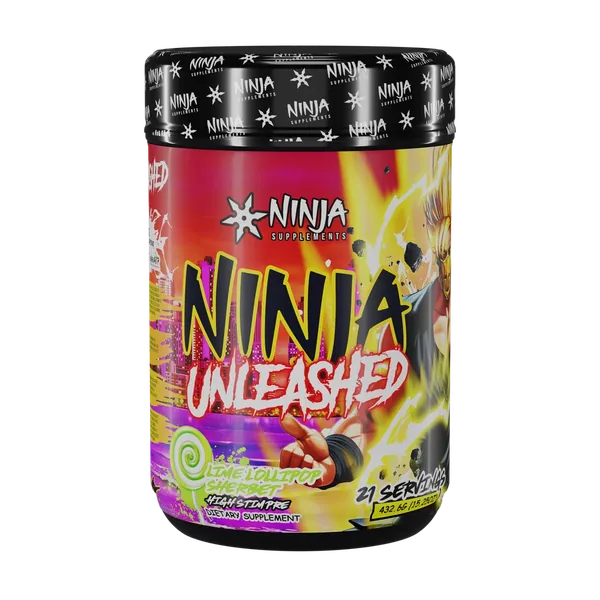
Who it’s for: experienced caffeine users who train early or mid-day and want energy, focus and the pump in one scoop. Who it’s not for: the caffeine sensitive, anyone under 18, pregnant or nursing, anyone avoiding yohimbine (take Ninja Up NoYo), and anyone whose session ends within 6 hours of bed (take Ninja Swole).
Ninja Up: The Doses This Article Is About
Per serving, straight from the label. The full label is on the product page.
| Caffeine Anhydrous | 300 mg |
| Infinergy™ (as Dicaffeine Malate) | 135 mg |
| L-Citrulline Malate 2:1 | 6000 mg |
| Beta Alanine | 3200 mg |
| L-Tyrosine | 1000 mg |
| L-Theanine | 150 mg |
| Alpha Yohimbine 90% Rauwolscine (Rauwolfia vomitoria)(Root) | 2.5 mg |
The numbers: $49.99 for 25 servings is $2.00 a scoop, or $1.70 a scoop with Subscribe and Save at 15% off. Flavours on sale: Energy Drink, Grape Bubblegum, Juiced Fruit and Pineapple Sangria.
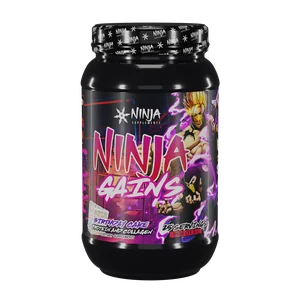
The product Ninja Up buyers add most often is Ninja Gains, the protein for the meal after the session.
I really love this pre workout. It gives really great energy and focus that lasts throughout my entire workout. This is definitely one of my top three pre's right now. Juiced fruit tastes amazing....
Best Pre on the market
This pre workout hits hard with clean ingredients. Taste amazing 🤩. You won’t regret buying this. Customer service was amazing too
One scoop of Ninja Up lists Caffeine Anhydrous 300 mg plus Infinergy (as Dicaffeine Malate) 135 mg, and 2.5 mg of alpha yohimbine: for experienced users only. Not for anyone under 18, pregnant or nursing. Check with your doctor if you have a heart condition or take medication, and do not stack it with other caffeine.
Frequently Asked Questions
How long does pre-workout take to kick in?
Caffeine enters the blood within minutes and peaks 30 to 120 minutes after you take it, according to the ISSN position stand. That is why most studies give it 60 minutes before exercise. Track when you feel it on a few sessions and set your own timing inside the 30 to 60 minute window.
Do you take pre-workout on an empty stomach?
Either can work for the caffeine; the studies we read do not settle it. Beta-alanine is the exception: the ISSN position stand reports that loading it with a meal raised muscle carnosine further. If a scoop sits badly on an empty stomach, take it after a light meal.
When should you take pre-workout without caffeine?
Take it 40 to 60 minutes before training, the window the citrulline studies used. Without caffeine, the time of day matters far less, which is why stim-free formulas like Ninja Swole suit evening sessions.
Should I take pre-workout before cardio?
Caffeine helps cardio too: the ISSN position stand says aerobic endurance shows the most consistent benefits from caffeine. For long sessions, the stand notes that caffeine taken later in exercise, when fatigue builds, may help some people more than a dose beforehand.
How late can you take pre-workout?
For a caffeinated scoop, at least 6 hours before bed, and more is better: in a 2013 trial, 400 mg of caffeine taken even 6 hours before bedtime still disturbed sleep, and the authors set 6 hours as the minimum. A 2023 meta-analysis set a more cautious line of 13.2 hours for a 217.5 mg pre-workout serving. After that point, switch to a stim-free scoop.
Next on the mission: which pre-workout ingredients actually work, and at what dose. And for the 60-minute countdown, Ninja Up is the scoop.
Sources
- Guest NS, et al. International society of sports nutrition position stand: caffeine and exercise performance. Journal of the International Society of Sports Nutrition, 2021 (several authors advise supplement companies).
- Vårvik FT, Bjørnsen T, Gonzalez AM. Acute Effect of Citrulline Malate on Repetition Performance During Strength Training: A Systematic Review and Meta-Analysis. International Journal of Sport Nutrition and Exercise Metabolism, 2021.
- Trexler ET, et al. International society of sports nutrition position stand: Beta-Alanine. Journal of the International Society of Sports Nutrition, 2015.
- Drake C, et al. Caffeine effects on sleep taken 0, 3, or 6 hours before going to bed. Journal of Clinical Sleep Medicine, 2013.
- Gardiner C, et al. The effect of caffeine on subsequent sleep: A systematic review and meta-analysis. Sleep Medicine Reviews, 2023.
- Kocak A, et al. The Effect of Consuming Caffeine Before Late Afternoon/Evening Training or Competition on Sleep: A Systematic Review with Meta-Analysis. Sports, 2025.
- Mora-Rodríguez R, et al. Caffeine ingestion reverses the circadian rhythm effects on neuromuscular performance in highly resistance-trained men. PLoS One, 2012.
- Jäger R, et al. International Society of Sports Nutrition Position Stand: protein and exercise. Journal of the International Society of Sports Nutrition, 2017.
- US Food and Drug Administration. Spilling the Beans: How Much Caffeine is Too Much?
How we wrote this: we rewrote this page and folded in a removed copy on the same question, read the caffeine and beta-alanine position stands (including the caffeine stand’s full text on absorption and half-life), the sleep trials and meta-analyses above, and checked every Ninja Up dose against the product label and every price against the store on the day of writing. These statements have not been evaluated by the Food and Drug Administration. This product is not intended to diagnose, treat, cure, or prevent any disease.