

Less than you think: in a 2024 analysis of 26 trials, the benefit grew with the dose only up to about 4 mg a day. Timing mattered too: taking it further ahead of bedtime predicted falling asleep faster, and in a 1995 trial even 0.3 mg in the evening shortened the time to fall asleep. The effect is modest: about 4 minutes faster to sleep and 13 more minutes of it in a 2005 meta-analysis of 17 studies.
“Melatonin for sleep” is typed into Google about 27,100 times a month in the US, up from 14,800 a year earlier, and plain “melatonin” about 368,000 (Google Ads Keyword Planner, September 2026). Most of what comes back is a pharmacy, a drugstore or a hospital page. So here is what the dose trials actually found, the timing that matters, and the free fixes that do half the work.
The Short Version
- More is not better: across 26 randomised trials and 1,689 observations, melatonin’s benefit to falling asleep and total sleep rose with the dose and peaked at 4 mg a day (Journal of Pineal Research, 2024).
- Earlier beats later: the same analysis found that taking it further ahead of bedtime predicted falling asleep faster, and suggested about 3 hours before your target bedtime instead of the usual 30 minutes.
- Light fights it: ordinary room light in the hours before bed delayed the start of melatonin in 99% of 116 healthy adults and cut its night short by about 90 minutes (Journal of Clinical Endocrinology and Metabolism, 2011).
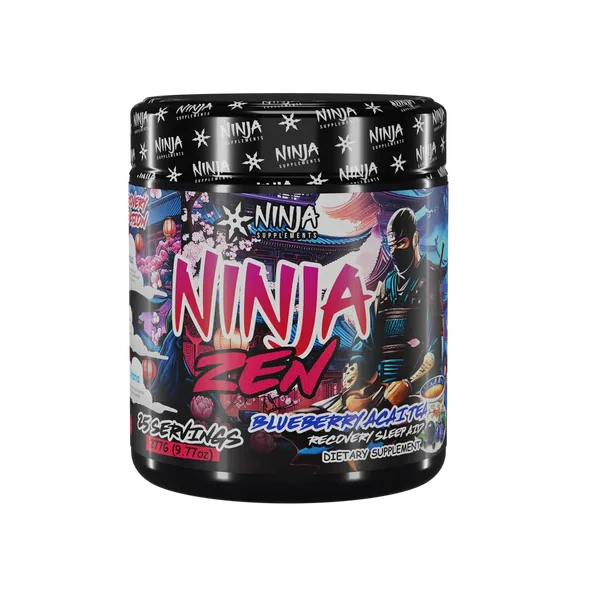
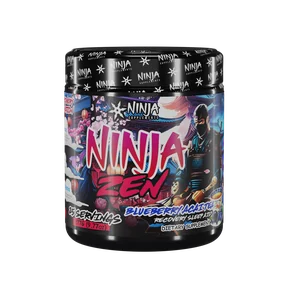
- Ninja Zen holds 2 mg of melatonin a scoop, the dose the 2024 analysis named as the one most used in clinical practice, alongside 350 mg of L-theanine.
What Does Melatonin Actually Do?
It tells your body that it is night. Melatonin is a hormone your brain makes in response to darkness, and it helps set the timing of your 24-hour clock and of sleep, according to the National Institutes of Health’s melatonin page. Light at night can block it. That makes it less a sleeping pill than a dimmer switch: it lowers the house lights, it does not knock you out.
Which is where Miami comes in. Picture Ocean Drive’s neon at 2 AM: your living room runs a quieter version of the same show. In a 2011 study of 116 healthy adults aged 18 to 30, ordinary room light in the hours before bed delayed the start of melatonin in 99% of them and shortened their melatonin night by about 90 minutes, compared with dim light. A 2015 trial had people read on a light-emitting e-reader or a printed book before bed: on the e-reader they took longer to fall asleep, made less melatonin, ran on a later body clock and were less alert the next morning.
Does Melatonin Actually Help You Sleep?
Yes, a little. A 2005 meta-analysis in Sleep Medicine Reviews pooled 17 studies and 284 people: against a placebo, melatonin cut the time to fall asleep by 4.0 minutes, raised sleep efficiency by 2.2% and added 12.8 minutes of sleep. Small numbers, and real ones.
A 2024 meta-analysis in the Journal of Pineal Research built a dose curve from 26 double-blind randomised trials published from 1987 to 2020, in healthy volunteers and in people who struggle to sleep. Melatonin shortened the time to fall asleep and lengthened total sleep. The honest limit: for trouble sleeping that lasts a month or longer, the American Academy of Sleep Medicine’s 2017 guideline found the evidence not strong enough to recommend it, as the National Institutes of Health’s page sets out. Think of it as a timing signal with a small sleep bonus, not a sedative.
How Much Melatonin Should You Take?
Start low, and stay at or under about 4 mg. In a 1995 trial at MIT, volunteers given 0.3 mg or 1 mg of melatonin at 6, 8 or 9 PM fell asleep faster than on a placebo, with no hangover on next-morning tests of mood and performance. The 2024 dose-response analysis found the benefit rose only up to about 4 mg a day, where its curve peaked. A bigger pill bought no more sleep.
| Amount | What the research found |
|---|---|
| 0.3 to 1 mg | Faster to fall asleep than a placebo when taken at 6, 8 or 9 PM, with no next-morning hangover (1995 trial) |
| 2 mg | The dose most used in clinical practice, usually 30 minutes before bed (2024 analysis) |
| About 4 mg | Where the benefit to falling asleep and total sleep peaked across 26 trials (2024 analysis) |
| More than 4 mg | No higher point on that curve: more to swallow, nothing more to show for it (2024 analysis) |
One catch: the number on the bottle may not be the number in it. Canadian researchers tested 31 melatonin supplements in 2017 and found the content ran from 83% below to 478% above the label; more than 71% missed it by over 10%, and eight held serotonin. In 2023, 22 of 25 US melatonin gummies were mislabelled, and the ones that held melatonin carried 74% to 347% of the stated amount.

When Should You Take Melatonin?
Well before lights out. Immediate-release melatonin peaks in the blood about 50 minutes after you swallow it, and its half-life is about 45 minutes, according to a 2015 systematic review of 22 studies. In the 2024 analysis, trials that gave the dose longer before sleep saw people fall asleep faster, and the authors suggested about 3 hours before your target bedtime against the usual 30 minutes.
| When | What the research says |
|---|---|
| About 3 hours before your target bedtime | The timing the 2024 analysis suggested: earlier doses predicted falling asleep faster |
| About 1 hour before | Immediate-release melatonin peaks in the blood about 50 minutes after a dose (2015 review) |
| 30 minutes before | The schedule most used in clinical practice, with 2 mg (2024 analysis) |
| In bed, lights on, phone in hand | Working against yourself: room light delays your own melatonin (2011 study) |
Why Isn’t Melatonin Working for You?
Usually because something else is shouting louder. The five usual suspects for a lifter:
- Caffeine too late. In a 2013 trial of 12 healthy sleepers, 400 mg of caffeine taken 6 hours before bed still cut measured sleep by more than an hour. A 6 PM pre-workout with that much caffeine sits inside that window for a midnight bedtime.
- Light. Phone, TV, a bright kitchen: room light before bed delayed melatonin in 99% of people in the 2011 study.
- The wrong time. Swallowed at lights out, it peaks in the blood about 50 minutes later (2015 review), while you lie there waiting.
- The wrong dose. Past about 4 mg bought no more benefit in the 2024 analysis, and many labels miss their own number (above).
- Expecting a knockout. The average gain in the 2005 meta-analysis was minutes, not hours.
If trouble sleeping lasts a month or more, that is a conversation for your doctor, not a bigger gummy. And if you are weighing up night supplements, magnesium is the other one people ask about: Does Magnesium Help You Sleep?
Coach’s Corner: The Nine-Minute Lights-Down Stretch
An hour before bed: lamps only, phone face down in another room, then onto the mat. The holds follow the ACSM’s numbers for flexibility work, about 60 seconds per stretch in all, here as 2 holds of 30 seconds.
- Child’s pose: 2 x 30 seconds, 10 seconds’ rest between. Hips back toward your heels, arms long on the floor, slow breaths through your nose.
- Figure-four stretch on your back: 2 x 30 seconds each side, 10 seconds’ rest. Ankle over the opposite knee, pull the bottom thigh toward your chest, hips flat on the floor.
- Lying hamstring stretch with a towel round your foot: 2 x 30 seconds each leg, 10 seconds’ rest. Knee soft, ease in, no bouncing.
- Lying twist: 2 x 30 seconds each side, 10 seconds’ rest. Both shoulders stay on the floor; let the knees fall to the side, never force them.
Healthy adults: if you have an injury, pain, a heart condition, or you are new to training, check with your doctor before you start. Stop if it hurts.
Is It Safe to Take Melatonin Every Night?
Short-term use appears safe for most people, according to the National Institutes of Health’s melatonin page: a 2015 safety review it cites found only mild side effects in short-term studies, such as headache, dizziness, nausea and sleepiness. Information on long-term safety is lacking, so taking it nightly for months is a question for your doctor. People who take medicine should check with their doctor first, and so should anyone pregnant or nursing. And keep it away from children: reports to US poison control centers about melatonin in people 19 and younger rose from 8,337 in 2012 to 52,563 in 2021.

The Fuel Plan
| 80 kg (176 lb) lifter | 100 kg (220 lb) lifter | |
|---|---|---|
| Daily protein, 1.6 to 2.2 g per kg (the full math: how much protein you need a day) | 128 to 176 g | 160 to 220 g |
| Before bed | About 30 to 40 g of casein protein, counted inside the day’s total (ISSN nutrient timing position stand, 2017) | |
| Last caffeine | At least 6 hours before bed: for an 11 PM bedtime, nothing after 5 PM (2013 trial) | |
| Food first | Tart cherries have been tested: 7 days of tart cherry juice concentrate raised melatonin and total sleep time in 20 adults (2012 trial) | |
| The scoop | One scoop of Ninja Zen in 8 to 10 oz of water, 15 to 20 minutes before sleep (its label’s direction); no caffeine on its label | |
These are general numbers for healthy adults. With kidney disease, diabetes or any medical diet, ask your doctor or a registered dietitian.
Where Ninja Zen Fits
If you want melatonin at a sensible dose inside a full night routine, Ninja Zen is built that way. 2 mg of melatonin a scoop: the dose the 2024 analysis named as the one most used in clinical practice, under the 4 mg where its benefit peaked. Plus 350 mg of L-theanine, 1,000 mg of GABA and 500 mg of chamomile, in a tea-flavoured drink with no caffeine on its label. If your days run on caffeine and your nights run late, this is the night half of the routine: 2 mg, not 10.
Straight talk: Zen is a full nighttime formula, not a melatonin tablet, and the trials above tested melatonin on its own, not our blend. Its label direction is one scoop 15 to 20 minutes before sleep, close to the 30-minute schedule clinics use most; do the dark part of the routine, lights down and phone away, in the hour before it.
Who it’s for: lifters who want a night routine in one drink: relaxation and sleep support when the day is done. Who it’s not for: anyone about to drive; anyone pregnant, nursing or under 18; anyone who wants melatonin on its own; and anyone on prescription medication, especially for mood or sleep, without their doctor’s yes.
Ninja Zen: The Doses This Article Is About
Per serving, straight from the label. Not the full list: the full label is on the product page.
| Melatonin (N-acetyl-5-methoxy tryptamine) | 2 mg |
| L-Theanine | 350 mg |
| Gamma aminobutyric acid (GABA) | 1000 mg |
| Chamomile Powder (Matricaria Chamomilla)(Flower, Stems) | 500 mg |
| Magnesium (as Magnesium Citrate) | 29 mg |
The numbers: $53.99 for 25 scoops is $2.16 a scoop, or $1.84 with Subscribe and Save (15% off, $45.89 a tub). All four flavours are in stock: Blueberry Acai Tea, Honey Lemon Tea, Mango Ginger Tea and Strawberry Hibiscus Tea.
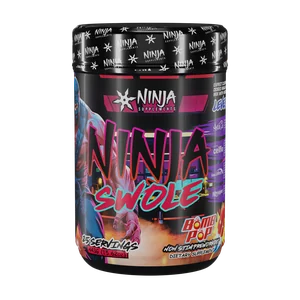
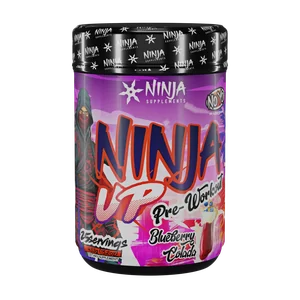
One of the tubs people most often buy with Ninja Zen is Ninja Up, our high-stim pre-workout: Ninja Up for the morning session, Ninja Zen for the night, and at least 6 hours between your last caffeine and bed.
Love it! I use it nightly to get a solid nights sleep, wake up refreshed and ready for my day.
Works very well for my husband and I
When I know I'm able to get a solid 7 8 hours this is my go to ...Great product all around
Ninja Zen also contains 5-HTP, L-Tryptophan and Mucuna Extract (98% L-Dopa). If you are pregnant or nursing, under 18, or take any prescription medication, especially for mood or sleep, check with your doctor before you start. The label’s own warnings apply: healthy adults 18 or older only, and never with alcohol or other stimulants. Take it when your night is done, never before you drive. The neon can wait until tomorrow.
Frequently Asked Questions
Does melatonin help you stay asleep?
A little. In a 2005 meta-analysis of 17 studies, melatonin added 12.8 minutes of sleep and raised sleep efficiency by 2.2% against a placebo, and a 2024 analysis of 26 trials found total sleep rose with the dose up to about 4 mg a day. Expect minutes, not hours.
How long before bed should you take melatonin?
The schedule most used in clinical practice is 2 mg about 30 minutes before bed, according to a 2024 analysis of 26 trials. The same analysis found that earlier doses, up to about 3 hours before your target bedtime, predicted falling asleep faster. Immediate-release melatonin peaks in the blood about 50 minutes after a dose (2015 review).
Is 10 mg of melatonin too much?
It is more than the research needs. A 2024 dose-response analysis of 26 trials found the benefit to falling asleep and total sleep peaked at about 4 mg a day, and a 1995 trial found 0.3 mg and 1 mg already worked. The National Institutes of Health notes there is not enough information on side effects at doses above what the body makes, so ask your doctor before taking high doses for weeks.
Is it safe to take melatonin every night?
Short-term use appears safe for most people, according to the National Institutes of Health, with mild side effects such as headache, dizziness, nausea and sleepiness. Information on long-term safety is lacking. If you are pregnant or nursing, or take prescription medication, check with your doctor first.
What are the side effects of melatonin gummies?
The same as other melatonin: a 2015 safety review cited by the National Institutes of Health found mild headache, dizziness, nausea and sleepiness in short-term studies. Gummies add a dosing problem: in 2023, 22 of 25 US melatonin gummies were mislabelled, holding 74% to 347% of the stated melatonin in those that had any. Keep them out of children’s reach.
Next read: Does Sleep Affect Muscle Growth?, if you want to know what those lost minutes cost under the bar. And for the night routine in one scoop, Ninja Zen is the tub.
Sources
- Cruz-Sanabria F, et al. Optimizing the Time and Dose of Melatonin as a Sleep-Promoting Drug: A Systematic Review of Randomized Controlled Trials and Dose-Response Meta-Analysis. Journal of Pineal Research, 2024.
- Brzezinski A, et al. Effects of exogenous melatonin on sleep: a meta-analysis. Sleep Medicine Reviews, 2005.
- Zhdanova IV, et al. Sleep-inducing effects of low doses of melatonin ingested in the evening. Clinical Pharmacology and Therapeutics, 1995.
- Harpsøe NG, et al. Clinical pharmacokinetics of melatonin: a systematic review. European Journal of Clinical Pharmacology, 2015.
- Gooley JJ, et al. Exposure to room light before bedtime suppresses melatonin onset and shortens melatonin duration in humans. Journal of Clinical Endocrinology and Metabolism, 2011.
- Chang AM, et al. Evening use of light-emitting eReaders negatively affects sleep, circadian timing, and next-morning alertness. Proceedings of the National Academy of Sciences, 2015.
- Drake C, et al. Caffeine effects on sleep taken 0, 3, or 6 hours before going to bed. Journal of Clinical Sleep Medicine, 2013.
- Erland LA, Saxena PK. Melatonin Natural Health Products and Supplements: Presence of Serotonin and Significant Variability of Melatonin Content. Journal of Clinical Sleep Medicine, 2017.
- Cohen PA, et al. Quantity of Melatonin and CBD in Melatonin Gummies Sold in the US. JAMA, 2023.
- Howatson G, et al. Effect of tart cherry juice (Prunus cerasus) on melatonin levels and enhanced sleep quality. European Journal of Nutrition, 2012.
- Kerksick CM, et al. International society of sports nutrition position stand: nutrient timing. Journal of the International Society of Sports Nutrition, 2017.
- Morton RW, et al. A systematic review, meta-analysis and meta-regression of the effect of protein supplementation on resistance training-induced gains in muscle mass and strength in healthy adults. British Journal of Sports Medicine, 2018.
- Garber CE, et al. American College of Sports Medicine position stand. Quantity and quality of exercise for developing and maintaining cardiorespiratory, musculoskeletal, and neuromotor fitness in apparently healthy adults: guidance for prescribing exercise. Medicine and Science in Sports and Exercise, 2011.
- National Center for Complementary and Integrative Health (NIH). Melatonin: What You Need To Know. Last updated May 2024.
How we wrote this: we wrote this page because “melatonin for sleep” is searched about 27,100 times a month in the US and “melatonin” about 368,000 (Google Ads Keyword Planner, September 2026), and the questions Google shows beside it are whether melatonin keeps you asleep and what a dose is for. We read the meta-analyses, trials, reviews and the NIH page above, checked every Ninja Zen dose against its label, and took the price and flavours from the store on 3 November 2026. These statements have not been evaluated by the Food and Drug Administration. This product is not intended to diagnose, treat, cure, or prevent any disease.